

Designing Independence: 7 Layout Features That Make a Private Suite Truly Work
Quick answer: A private suite works long-term when it offers more than a bedroom and bathroom. The seven features that make it succeed are a defined living area, thoughtful physical separation, bathroom access without crossing common areas, sound buffering between spaces, kitchenette capability, a separate entrance where possible, and long-term flexibility so the space can evolve as family needs change.
Here’s what makes daily life feel respectful — not crowded.
Not every private suite layout that technically qualifies actually works well long-term. A bedroom and bathroom alone aren’t enough.
If multigenerational living is going to feel sustainable — not tense — the layout must support daily independence in subtle but meaningful ways.
If you haven’t already, it may help to first read our guide on what qualifies as a true multigenerational layout →. Today, we’re going deeper.
These are the features that separate “we can make this work” from “this feels natural.”
According to Pew Research, multigenerational households have more than doubled since 1971 — and the families who stay long-term are the ones whose homes were designed for daily independence, not just extra bedrooms.
A defined living area in the private suite layout
The most common shortcoming in so-called “in-law suites” is the absence of a real living space.
A comfortable chair in the corner of a bedroom is not the same thing as a defined sitting area.
A private suite should allow someone to:
- Watch television
- Read quietly
- Host a grandchild
- Relax independently
Without relying on the main family room.
When touring homes — especially Florida resale multigenerational homes → — pay attention to whether the living area feels intentional or improvised.
Thoughtful physical separation
Separation does not mean isolation.
But it does mean:
- A hallway break
- A pocket door
- A private wing
- A split-bedroom configuration
The best layouts create a subtle transition between spaces.
In attached suites under one roof, this physical buffer is what preserves privacy.
In detached guest houses, the structure itself provides separation — but interior layout still matters. You can explore the differences more in our in-law suite vs casita comparison →.
The quiet details of a private suite layout
Three features that rarely get discussed — and almost always determine how the suite actually feels.
Bathroom access without crossing common areas
A true private suite includes a dedicated bathroom — but just as important is how that bathroom is accessed.
If someone must cross the kitchen or living room at night, the design feels intrusive.
Direct access from the bedroom or living area maintains dignity.
Sound buffering between spaces
Does the suite share a wall with the main TV room? Is the bedroom positioned next to the kitchen? Is there insulation or double drywall between wings?
Noise is one of the fastest ways for multigenerational living to feel crowded.
Layouts that buffer sound create emotional breathing room.
A separate entrance, when possible
Not mandatory — but powerful. It allows guests to visit without walking through the main home, adult children to come and go independently, and care providers to access the suite discreetly.
In attached layouts: side-entry or courtyard access. In ADU and casita structures →, private entrance is typically built in.
Entrance design shapes how independent the space feels.
Kitchenette capability — even if it’s modest
Independence often hinges on small daily rituals.
Morning coffee. A light lunch. An evening snack.
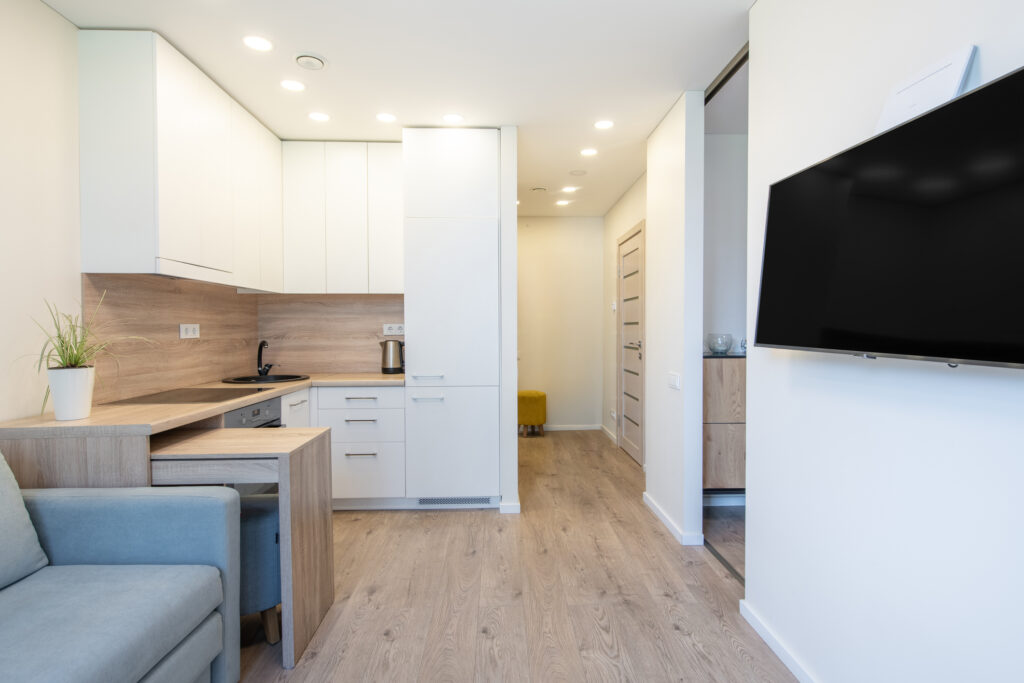
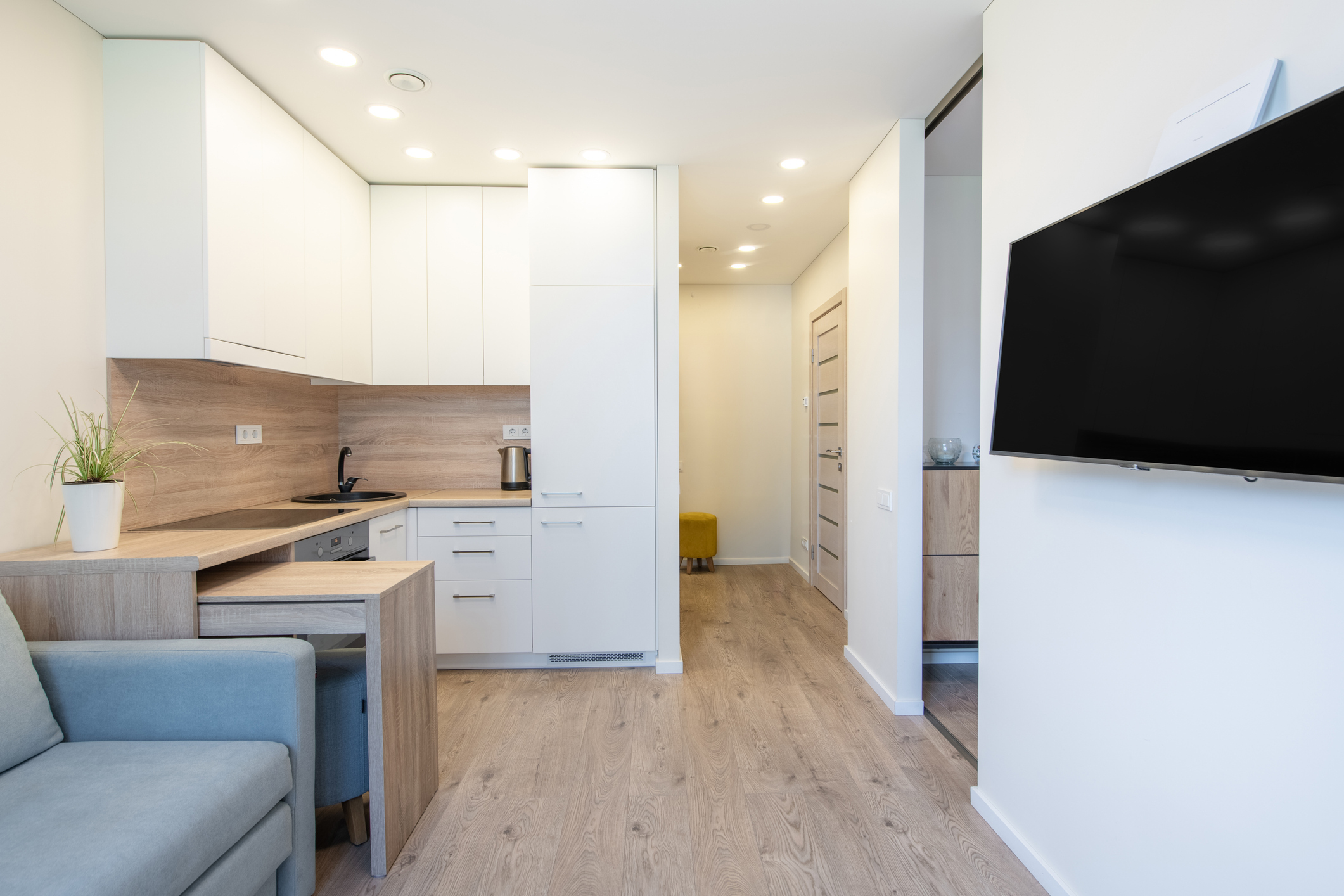
A private suite layout does not require a full second kitchen. But space for a refrigerator, a microwave, cabinet storage, and a sink (when possible) can transform how the space functions.
If you’re exploring new construction multigenerational homes in Florida →, many builders now offer optional kitchenette upgrades in private suite wings — especially across Southwest Florida and Tampa Bay.
Long-term flexibility in your private suite layout
Perhaps the most overlooked feature: can this space evolve?
It may house:
- An aging parent
- An adult child
- A live-in nanny
It could become:
- A guest suite
- A rental opportunity (where permitted)
- A private office
- A home for a returning family member
The best multigenerational layouts are not just reactive. They are adaptable.
If you’re still deciding whether living under one roof makes sense for your family, you may want to read when is it time to live under one roof again →.
A private suite layout that actually works
Multigenerational living works best when boundaries are built into the structure, daily independence is possible, privacy is preserved, and interaction is intentional.
Boundaries built into the structure
Daily independence is possible
Privacy is preserved
Interaction is intentional
When those elements are present, the home feels respectful — not crowded.
Not temporary. Sustainable.
Evaluating a specific home? We’re always happy to review the floorplan with you and talk through how daily life might feel inside the space.
Two residences. One address.
A private suite layout isn’t about square footage. It’s about whether the space can carry someone’s daily life with dignity.
The best private suites don’t just exist within the home. They function as a home of their own — within a larger one.
Common questions