


Florida Multigenerational Home Buyer’s Guide
Everything Florida Families Should Know About Buying a Multi-Generational Home
Multi-generational living is reshaping the American housing market — and Florida is one of the most active states in the country for this kind of home. Recent data from Realtor.com puts Tampa, Orlando, Jacksonville, and Miami among the most-searched markets for properties with mother-in-law suites, casitas, and accessory dwelling units. Pew Research counts nearly 60 million Americans now living in multigenerational households, the highest share since the 1950s.
For Florida families, this trend meets a unique housing landscape. No basements, limited duplex inventory, and a growing supply of new construction homes with purpose-built suite floorplans. Whether you’re a family welcoming aging parents, an adult child returning home, a sandwich-generation household balancing both, or a household combining incomes for the kind of home neither could afford alone — Florida has options. Finding the right one requires knowing what to look for.
This guide is the foundation. We’ll walk through who’s buying, what configurations work, what Florida costs, and how the buying process actually unfolds. Specific topics get deeper treatment in the linked articles and roadmap stages throughout.
The context
Why Multi-Generational Living Is Growing in Florida
Three forces are converging to make multi-generational housing one of the fastest-growing segments of Florida real estate.
Demographics. Florida is the fastest-aging state in the country, with retirees moving in and adult children moving down to be closer to parents. The Census Bureau reports that the share of multigenerational households is highest in metros with strong retirement migration — and Florida has more of those metros than almost any other state.
Economics. Combined incomes mean more borrowing power. Compared to assisted living — which can run $4,000 to $12,000 per month per resident in Florida — sharing a mortgage on a home with a mother-in-law suite or detached casita is often dramatically more affordable over time. Our cost comparison guide walks through the actual numbers over five and ten years. Two households living together also share utilities, insurance, repair costs, and often eldercare or childcare.
Cultural shift. The image of multigenerational living as something only certain cultures or income groups choose has changed. Today’s buyers come from every demographic — Hispanic, Asian, Caribbean, Indian, and Middle Eastern families for whom multigenerational living is traditional, alongside families of every background who simply prefer the closeness, the support, and the financial logic.
For more on whether this path is right for your family, our roadmap covers the foundational decision-making in Stage 01: Is Multigenerational Living Right for Your Family?
Who’s buying
Six Common Buyer Profiles
Multi-generational buyers come from every walk of life. Most fall into one of these six profiles — and recognizing yours helps clarify what configuration and what financing approach will fit best.
Profile 01
Families Welcoming Aging Parents
The largest segment of multi-generational buyers. Adult children purchasing a home where a parent can move in, or aging parents buying to be closer to family. Often coordinated around a recent diagnosis, hospitalization, or simply the recognition that proximity is going to matter. The right mother-in-law suite preserves a parent’s independence and dignity while making caregiving possible when it becomes needed.
Profile 02
Adult Children Returning or Staying Home
The “boomerang generation” — adult children moving back home, or never leaving in the first place. Reasons range from student loan debt and saving for a down payment to early-stage careers, young families needing support, or simply preferring the proximity. A garage apartment, casita, or attached suite gives an adult child true independence within reach.
Profile 03
Sandwich Generation Households
Middle-aged buyers caring for aging parents and children under 18 simultaneously. Multi-generational living lets everyone share support — childcare from grandparents, eldercare close at hand — without anyone losing their own space. Single parents in particular often find that bringing in their own parents transforms what’s possible day-to-day.
Profile 04
Cultural and Family Preference
For many families — Hispanic, Asian, Caribbean, Indian, Middle Eastern, and households of many backgrounds — multi-generational living isn’t a new idea. It’s the way home is supposed to feel. The challenge in Florida is finding properties built for it. We help families find homes with real granny flats, in-law suites, or detached guest houses that honor that way of life.
Profile 05
Cost-Sharing Households
Two households pooling down payments and splitting the mortgage to buy something neither could afford alone. Both households end up in a better home with more equity and lower per-person housing costs than living separately. The key is a layout where both sides genuinely have their own space — otherwise the financial win becomes a relationship loss.
Profile 06
Specialty Situations
Single buyers (now 19% of multi-generational purchases nationally), veterans using VA financing, families coordinating an out-of-state sale alongside a Florida purchase, and households with accessibility needs requiring wheelchair-friendly layouts, ground-floor masters, or ADA-compliant configurations.
Wealthy households planning ahead for live-in caregivers, household staff, or future caregiving needs also fit here — a growing segment of Florida buyers researching homes with private caregiver suites. Each specialty situation has specific considerations we navigate alongside the family.
More buyer profiles and specific situations are covered in detail across our blog.
The configurations
What Multi-Generational Homes Actually Look Like
The terminology around these homes is loose — “mother-in-law suite,” “in-law apartment,” “casita,” “ADU,” “granny flat,” “guest house” all get used interchangeably, sometimes accurately and sometimes not. What actually qualifies as a true multi-generational layout is more specific than the marketing labels suggest.
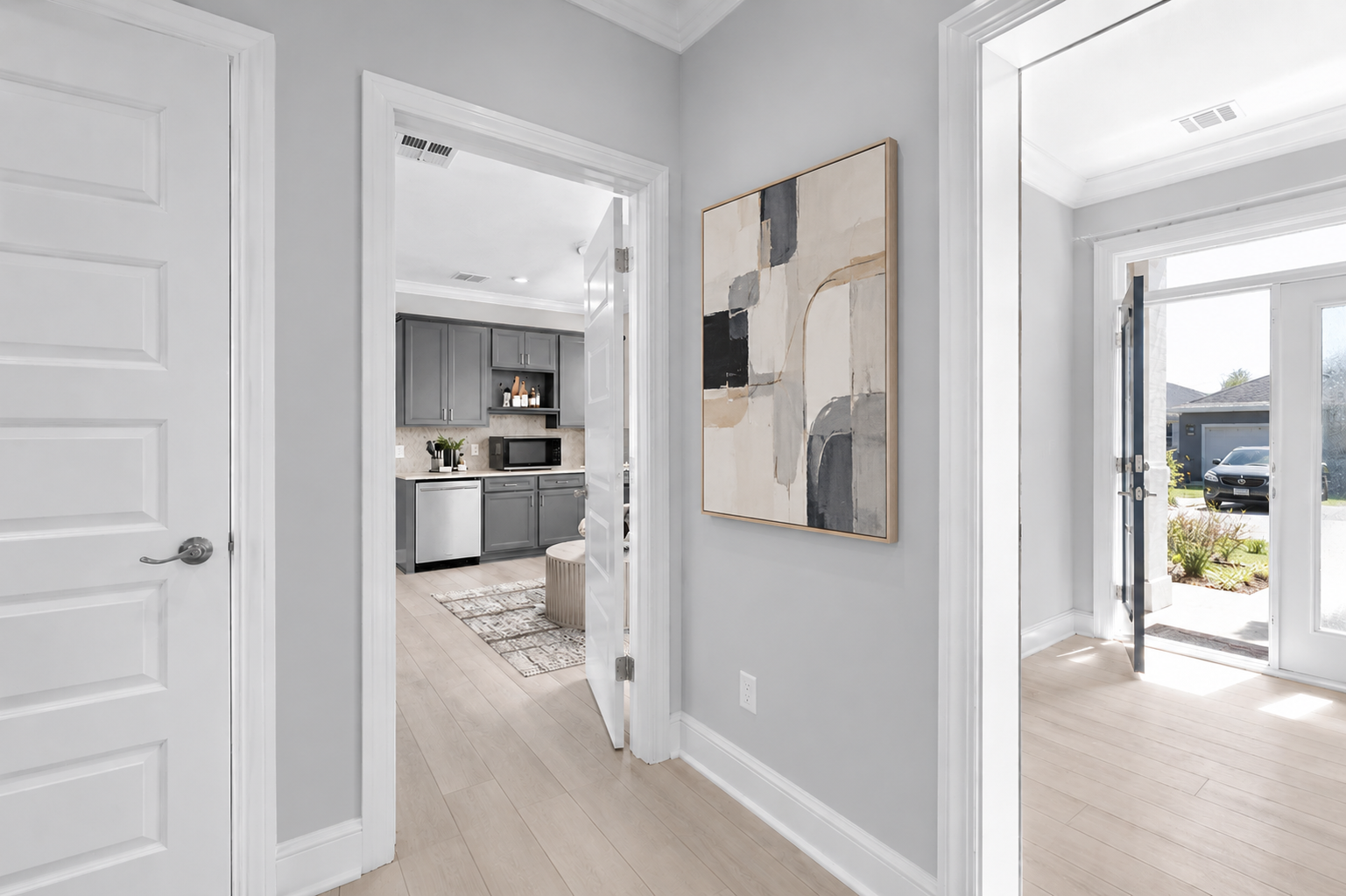
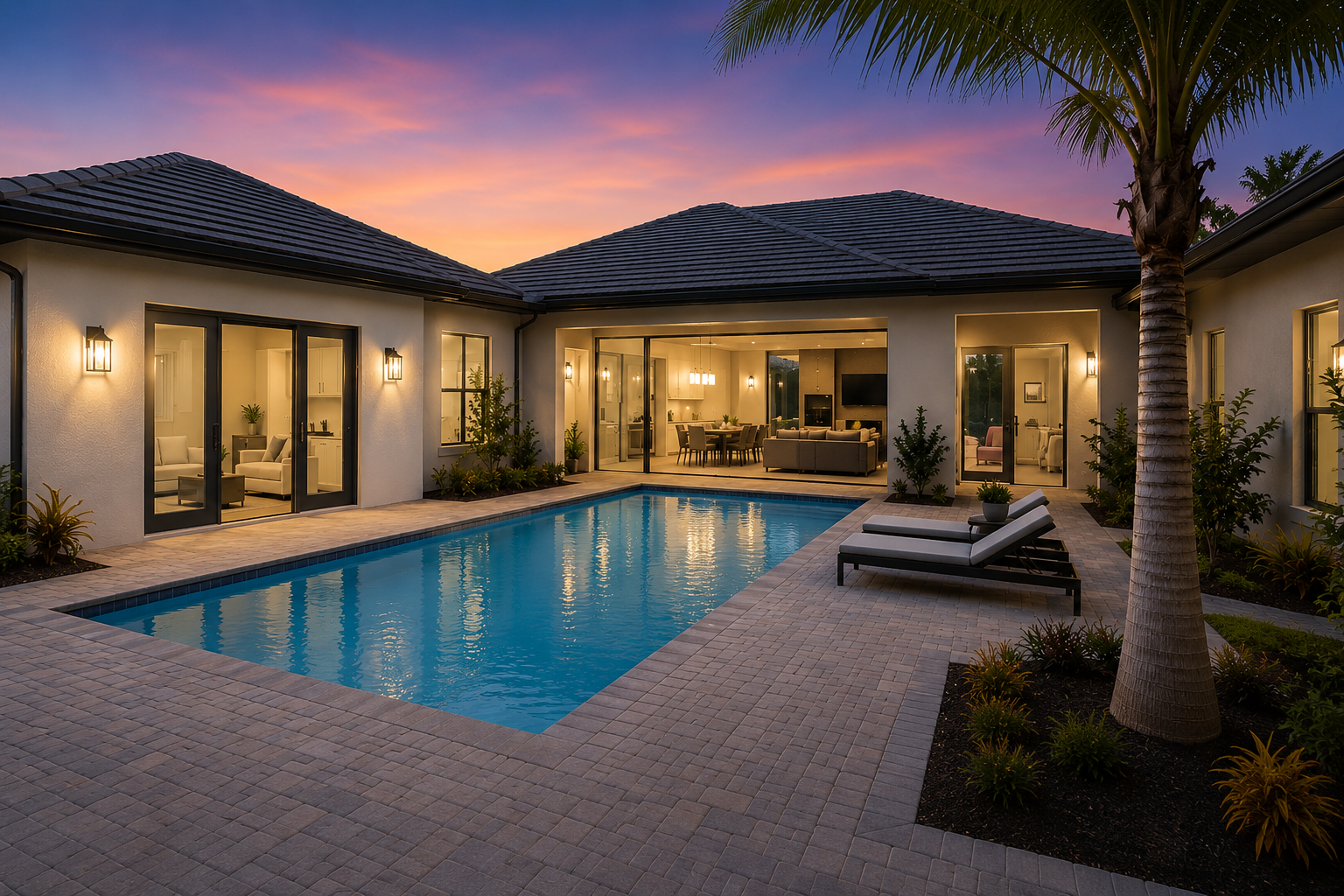
Attached private suite. A dedicated wing of the main home with its own bedroom, bathroom, and ideally a sitting area, kitchenette, and private entrance. The most common configuration in Florida new construction. Common in floorplans from DR Horton, Lennar, Pulte, Maronda Homes, and Toll Brothers.
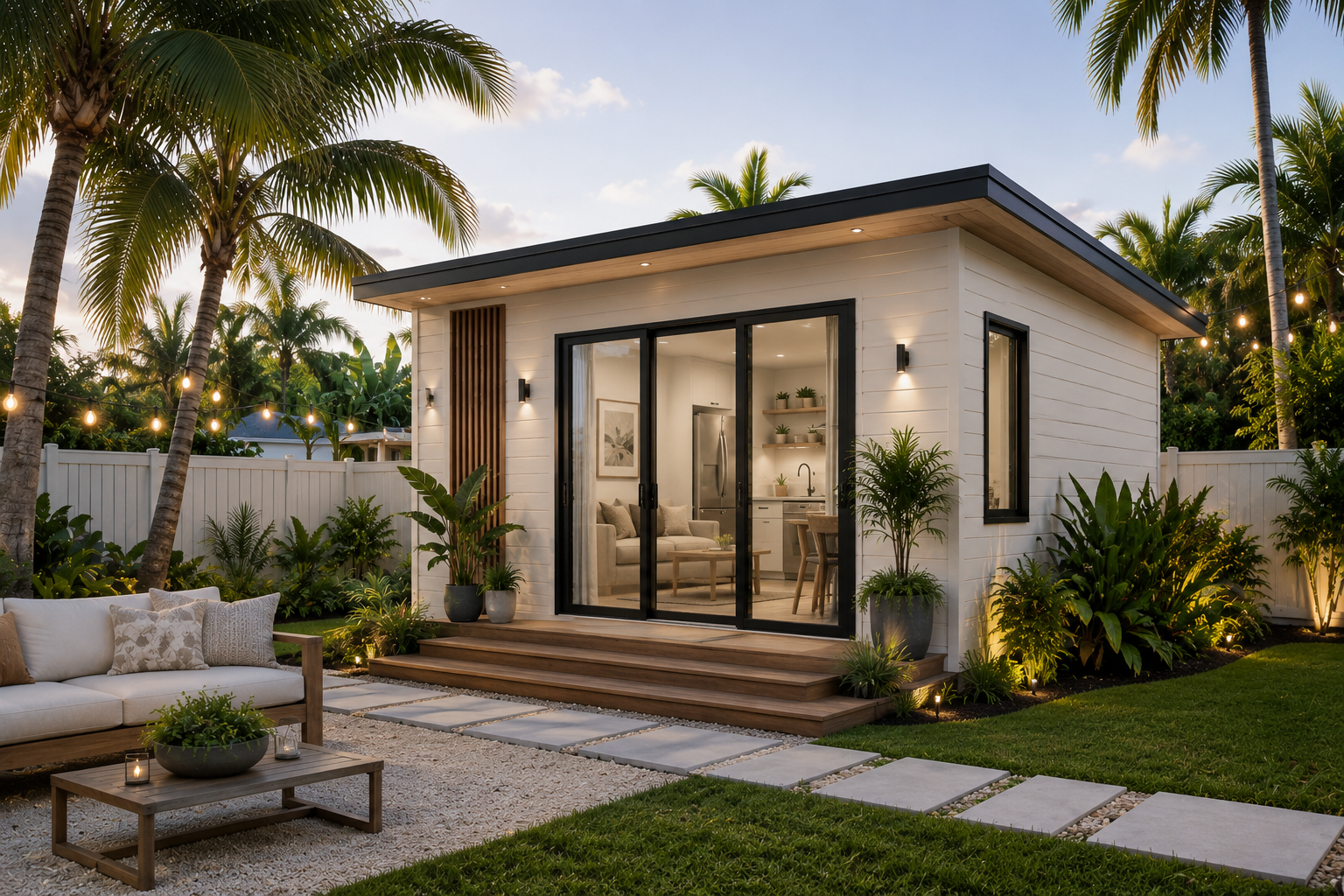
Detached guest house or casita. A separate structure on the same parcel — independent entrance, full bathroom, kitchen, and living area. The strongest physical separation available without buying two parcels. Most common in South Florida estate neighborhoods, Naples, and select acreage corridors.
Garage apartment. A finished apartment above a detached garage, accessed by an exterior staircase. Particularly strong for adult children who want full independence within reach. Found in select Florida communities, with growing inventory in St. Petersburg and parts of Sarasota.
Accessory Dwelling Unit (ADU). A purpose-built secondary structure — sometimes called a backyard cottage, granny flat, or secondary dwelling. Florida ADU regulations are evolving rapidly with new statewide legislation, making ADUs a more accessible option than they have been historically.
Duplex. Two completely independent units sold as a single property. Common in Cape Coral, Lehigh Acres, and select markets. The cleanest configuration available — one transaction, two genuine households.
For deeper content on configurations, see our blog post on attached suites vs detached casitas, our piece on tiny homes, ADUs, and backyard casitas, and our guide to 7 layout features that make a private suite work.
Where to look in Florida
Florida’s Five Multi-Generational Markets
Multi-generational inventory varies significantly across Florida. Each region has distinct strengths, price points, and configuration availability.
Central Florida — strongest builder inventory and widest range of price points. Orlando metro and surrounding corridors offer the most multi-generational new construction options in Florida.
Sarasota / Bradenton — the nation’s top master-planned community market for multi-generational housing. Lakewood Ranch and Wellen Park lead with purpose-built suite floorplans.
Southwest Florida — the most variety, including duplexes in Cape Coral, detached guest houses in Naples, and ADU-friendly acreage corridors in rural counties.
Tampa Bay — strong suburban suite inventory across Brandon, Riverview, Valrico, Apollo Beach, plus growing ADU options in Pinellas and Pasco.
South Florida — the deepest inventory of detached guest houses, casitas, and estate configurations in Florida. Decades of homes built specifically for multi-generational living.
Each regional page covers price points, communities, and configurations specific to that market.
The financial picture
Financing a Multi-Generational Home
Multi-generational purchases work with most loan programs, but the right one depends on your situation. Conventional loans handle most multi-gen transactions, including non-occupying co-borrower arrangements where a parent helps qualify an adult child or vice versa. Pricing varies significantly by region and configuration — our Florida cost guide walks through the actual ranges.
FHA financing offers more flexibility on credit and down payment requirements and allows financing of homes with mother-in-law suites and ADUs that meet specific guidelines. VA financing is available to veteran-eligible buyers and is one of the strongest tools for multi-generational purchases — often with no down payment required.
Florida-specific tools matter too. The Lady Bird deed, also called an enhanced life estate deed, lets a property owner retain control during their lifetime while automatically transferring ownership at death — bypassing probate entirely. For aging parents wanting to ensure adult children inherit cleanly, it’s often the right tool.
For the full preparation process — financial readiness, family agreements, ownership structures, and timeline — see Stage 02: Getting Your Family and Finances Ready.

The buying process
The Six-Stage Buyer’s Roadmap
A multi-generational purchase has more moving parts than a standard home buy. Our roadmap breaks the process into six stages so you can navigate each one with the information you need at the right moment.
Stage 01
Is Multigenerational Living Right for Your Family?
The decision-making framework. Common scenarios, family conversations, and what success looks like one year in.
Stage 02
Getting Your Family and Finances Ready
Financial readiness, family agreements, deed structures, and the realistic 90/60/30-day timeline before searching.
Stage 03
What Most Agents Miss About Multi-Generational Homes
Six things generalist agents overlook, three areas of multi-generational expertise, and questions to ask any agent.
Stage 04
Touring Multi-Generational Homes
Twelve evaluation items at every showing, red flags to watch for, and our prescreening process for out-of-state buyers.
Stage 05
Inspections, Appraisals & Multi-Generational Concerns
Seven inspection concerns specific to multi-generational homes, the appraisal challenge with comparable sales, and how findings become negotiating leverage.
Stage 06
Setting Up Two Households Under One Roof
The first thirty days, financial systems, privacy norms, aging in place modifications, and what makes the arrangement healthy long-term.
Deeper articles
Featured Articles for Multi-Generational Buyers
Specific topics covered in depth across our blog. Each article is written for the practical questions families actually ask.
Cost & Financing
Multigenerational Living vs Assisted Living: A Real Cost Comparison
Florida assisted living costs $4,000–$12,000 per month. A multigenerational home is a one-time purchase. Here is how the numbers actually compare over time.
Florida Pricing
How Much Does a Multigenerational Home Cost in Florida?
Multigenerational homes in Florida range from the $300s to well over $1 million. Here is what actually drives the cost — by region, layout, and configuration.
Veteran Buyers
VA Loans for Multigenerational Home Purchases in Florida
VA financing is one of the strongest tools available for veteran-eligible buyers purchasing a multigenerational home in Florida. Here is how it works.
ADU Regulations
Florida ADU Laws: A 2026 Buyer’s Guide
Florida just passed sweeping ADU legislation requiring all cities to allow accessory dwelling units in single-family zones. Here is what every multigenerational buyer needs to know.
Premium Properties
Florida Homes With Private Suites for Live-In Caregivers
A growing segment of Florida buyers is searching for homes with private suites for live-in caregivers, nannies, and household staff. Here is what makes one work.
Foundational
What Qualifies as a True Multi-Generational Home Layout?
The term “multigenerational home” gets used loosely. Here is what genuinely qualifies — and what to avoid when generic real estate listings stretch the definition.
Browse our complete blog library for additional articles on family decision-making, layout features, configurations, and Florida market insights.
When you’re ready
Talk Through Your Family’s Situation With Us
We are Florida’s only brokerage dedicated exclusively to multi-generational housing. We help families understand what’s possible, what to look for, and what’s actually available across all five Florida regions. Whether you’re early in the decision process or already under contract, we’re here.
Two Residences. One Address. Reach out when you’re ready to start the conversation.