

Tiny Homes, ADUs, and Backyard Casitas: Are They a Good Fit?
Quick answer: A backyard casita is a small detached living structure — essentially a type of ADU — with its own bedroom, bathroom, living area, and kitchenette. It works well when the lot supports it, local zoning allows it, the design is intentional and complete, and independence is a top priority. It can be a strong fit for guests, rental income where permitted, or an independent parent, but an attached suite is often more practical when active caregiving is expected within a few years.
A realistic look at small spaces with big potential.
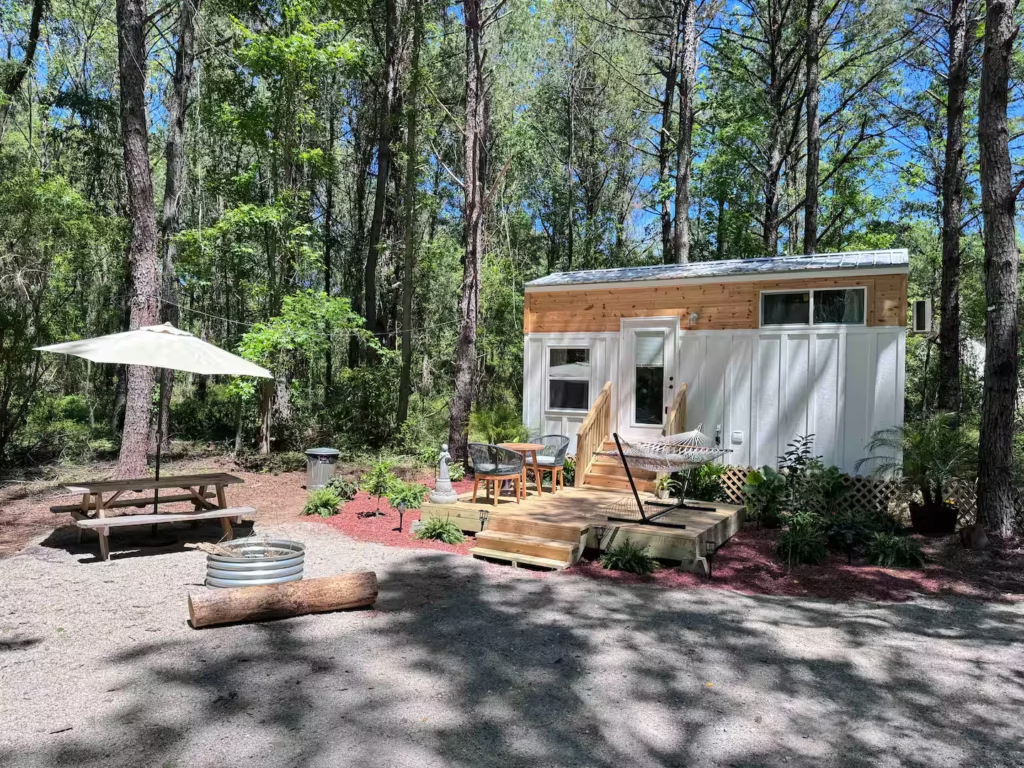
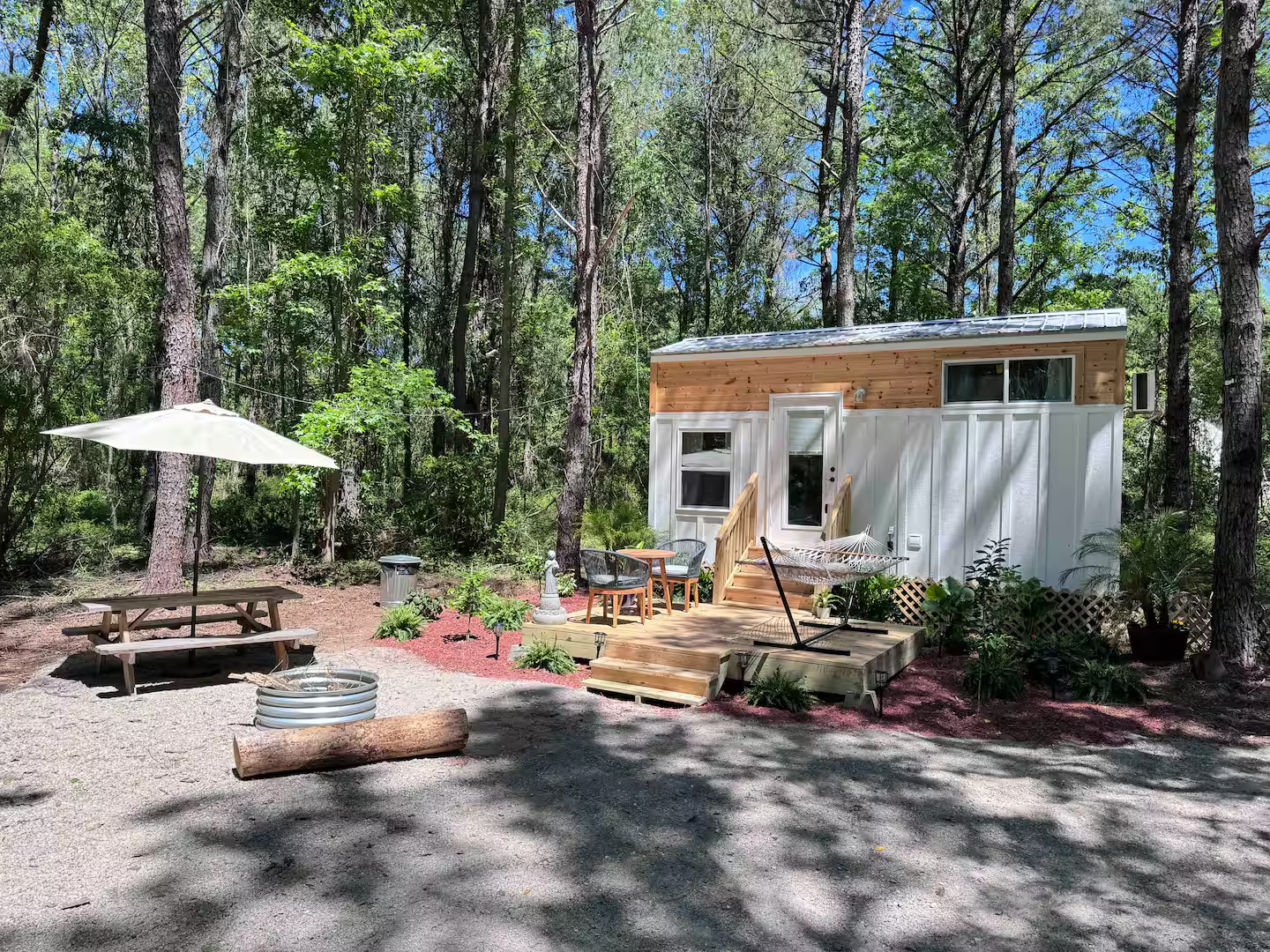
There’s something undeniably charming about a tiny home. Clean lines. Efficient design. Everything intentional. And for families exploring multigenerational living, placing a backyard casita or ADU (Accessory Dwelling Unit) on the property can feel like the perfect balance.
Close — but separate. Connected — but autonomous.
But before falling in love with the concept, it’s worth asking: is a backyard casita actually the right fit for your family?
According to Pew Research, multigenerational households have more than doubled since 1971 — driving a surge of interest in detached living solutions like ADUs and casitas. Let’s talk about both the excitement and the realities.
Why a backyard casita feels so appealing
For many families, detached backyard structures offer something attached layouts can’t quite match: real psychological autonomy.
A well-designed backyard casita can include a bedroom, a bathroom, a small living area, and a kitchenette — meeting the same criteria laid out in what qualifies as a true multigenerational layout →.
Daily interaction becomes intentional rather than automatic. You visit — instead of overhearing. You knock — instead of walking down the hall.
Detached casitas work especially well when adult children need transitional housing, parents value strong independence, guests stay long-term, or families want flexibility for the future.
Emotionally, ADUs can feel less like “moving back in” and more like “living next door.”
Four realities of building a backyard casita
This is where the dream meets daily life. Four considerations that determine whether a backyard casita actually works.
Zoning & local regulations
Not every Florida city allows detached ADUs freely. Some areas restrict size, occupancy, rental usage, or placement on the lot.
Acreage properties and certain Central Florida zones may offer more flexibility than dense suburban neighborhoods. Across Southwest Florida and Tampa Bay, the rules vary by municipality.
Before falling in love with a Pinterest image, verify local regulations.
Cost surprises
Tiny homes are small — but they are not always inexpensive. You’re still paying for foundation, plumbing, electrical, permits, utility connections, and site work.
Per-square-foot costs typically exceed traditional home construction.
For some families, buying a home with an attached suite is more cost-effective than building detached.
Long-term functionality
A tiny home may feel exciting at first. But ask: will mobility be an issue later? Is the bathroom designed for aging in place? Is there enough storage?
Will 400–600 square feet feel sustainable five years from now?
Design matters deeply in small spaces. Layout becomes even more critical.
Caregiving proximity
Detached structures create stronger separation — which can be beautiful. But if caregiving becomes necessary, is nighttime access simple? Is the path covered during Florida storms?
For families anticipating health changes, an attached private suite → may feel more practical.
Timing matters — explored further in when is it time →.
When a backyard casita is the right answer
Despite the considerations, a backyard casita can be incredible when the conditions line up:
The lot supports it
Zoning allows flexibility
The design is intentional
Independence is a top priority
The structure includes full living functionality
When those conditions are met, a backyard casita can also provide:
- Future guest space
- Potential rental income (where permitted)
- Home office flexibility
- Transitional housing for adult children
The key is not whether it’s small. It’s whether it’s complete.
Let’s review your lot before you commit
Before committing to construction, we’re happy to review zoning considerations, lot potential, and whether an attached suite might offer a simpler solution.
A 30-minute conversation can save months of permit headaches.
Two residences. One address.
Tiny homes are charming. A backyard casita is appealing. Detached independence sounds ideal.
But like all multigenerational solutions, success depends on layout, function, and long-term sustainability — not just the structure itself.
Tiny homes and ADUs are not shortcuts. They are full housing solutions in smaller footprints — when they’re designed that way.
Common questions