

The Loneliness Epidemic Is Quietly Shortening American Lives — and the Cure Is Older Than the Suburbs
Quick answer: Decades of research link social isolation to a higher risk of early death — on a scale comparable to smoking — while strong social ties raise survival odds by roughly 50%. Multigenerational living is one of the most durable ways to build that connection, but the benefit depends on autonomy: the healthiest setups pair daily closeness with a genuinely separate space, such as an in-law suite, casita, or detached ADU with its own entrance, bathroom, and kitchenette.
We spent fifty years building lives that keep generations apart. The longevity research now suggests that was a mistake measured not in inconvenience, but in years.
For most of human history, the question of where aging parents lived answered itself: with their children, near their grandchildren, inside the same daily rhythm. The detached, one-household-per-roof life that feels normal in America today is, historically speaking, a very recent experiment. And the data coming back on that experiment is sobering.
The U.S. Surgeon General has called loneliness an epidemic, and the mortality science behind that word is blunt. At the same time, a growing share of Americans is quietly reversing course — moving back in together, across generations, under one roof. Here’s what the research actually says, and why the way you design that shared roof matters as much as the decision to share it.
Weak social connection raises mortality risk on a scale comparable to smoking. Strong connection does the opposite — and family is the most durable connection most people will ever have.
Loneliness is a mortality risk, not just a mood
In 2010, researchers led by Julianne Holt-Lunstad published a meta-analysis in PLOS Medicine pooling 148 studies. The finding became a landmark: people with stronger social relationships had a 50% greater likelihood of survival over the study periods than those with weaker ones. A follow-up analysis found that social isolation and loneliness were each associated with a meaningfully higher risk of early death.
That research is now load-bearing in public health. The U.S. Surgeon General’s 2023 advisory, Our Epidemic of Loneliness and Isolation, drew on the same body of work to conclude that social connection increases the odds of survival by roughly 50% — and framed chronic isolation as a risk factor on par with well-known physical dangers.
The Blue Zones already figured this out
The world’s so-called Blue Zones — regions where people reach 100 at unusual rates — share a handful of habits. Diet and movement get the headlines, but two of the most consistent threads are social: keeping aging parents and grandparents nearby or in the home, and maintaining tight, multi-generational community bonds. Longevity, in these places, is not a solo achievement. It’s a household one.
That lines up cleanly with the mortality research. The Berlin Aging Study, following older adults for two decades, found that grandparents who provided non-custodial childcare — the ordinary work of watching the grandkids — had a 37% lower risk of death over the study period than peers who did not. Caregiving, within reason, appears to be protective for the caregiver.
The grandparent paradox
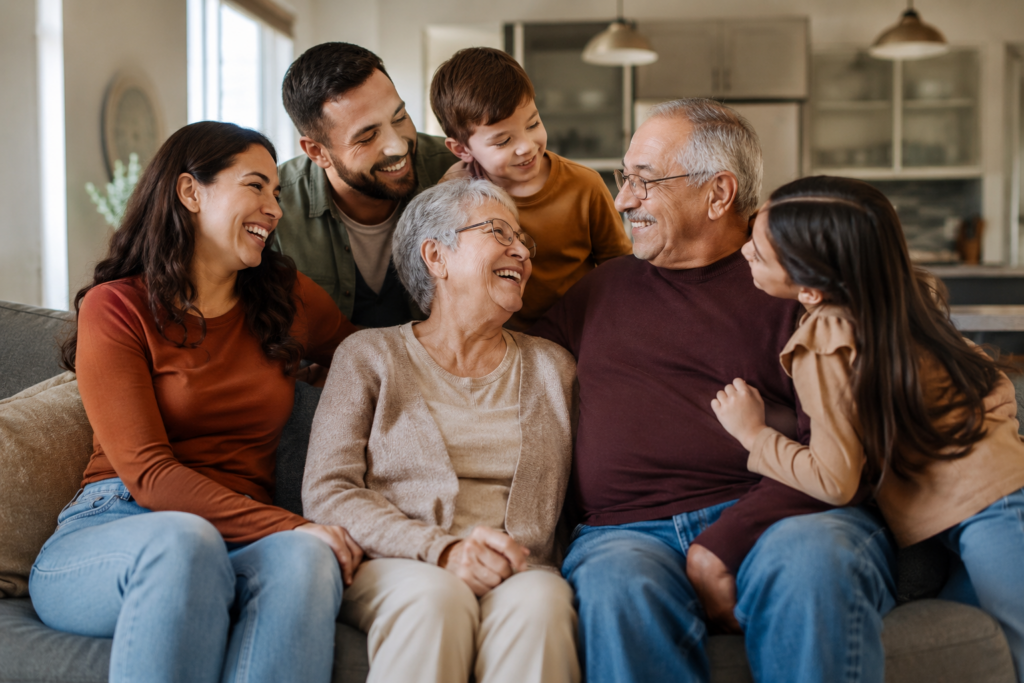
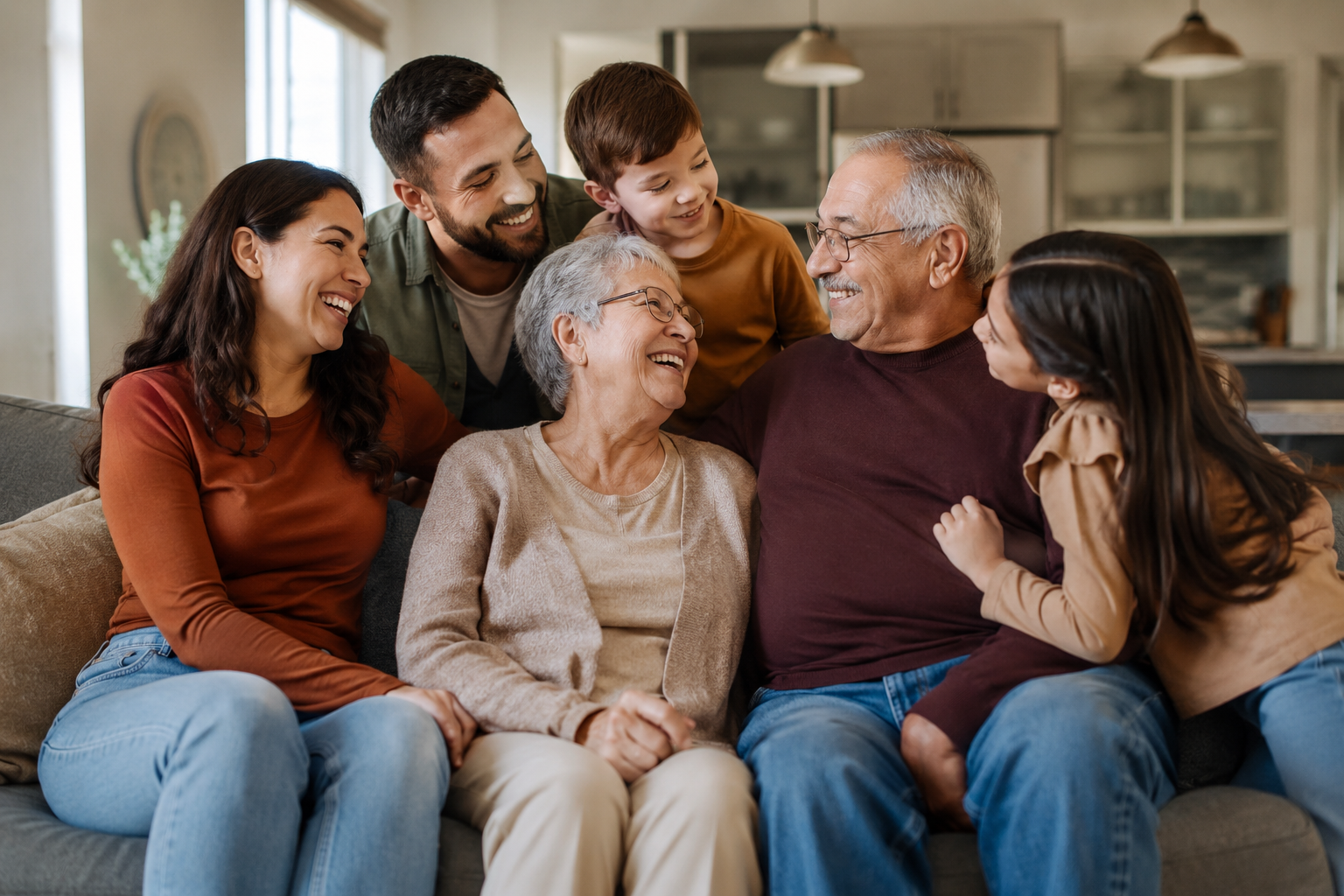
We often frame an aging parent moving in as something the family does for them — an act of care flowing one direction. The longevity data complicates that story. The grandparent who eats dinner with grandchildren, helps with the school run, and stays woven into daily life isn’t just being cared for. By every measure the research can find, they’re living longer because of it.
Why families are moving back together
This isn’t a fringe trend. According to Pew Research Center’s analysis of census data, the number of Americans living in multigenerational family households quadrupled between 1971 and 2021, reaching 59.7 million people — about 18% of the population. Families cite finances and caregiving as the practical drivers, but Pew also found a strong emotional dividend: far more people describe the arrangement as rewarding than describe it as stressful.
In other words, the fragmented household was the anomaly, and Americans are drifting back toward the older pattern — partly out of economics, partly out of something the data suggests we lost along the way.
The research keeps landing on one caveat: closeness heals, but forced closeness without autonomy does the opposite. The design of the home is where that line gets drawn.
Togetherness only works with autonomy
Here’s the honest part nobody putting out a feel-good “move in with family” pitch likes to mention: the benefits of multigenerational living are not unconditional. The same research that celebrates connection also flags its failure mode. When cohabitation feels forced, when a parent loses their sense of independence, when there’s no door to close and no space to retreat to, the happiness benefit erodes and the stress takes its place.
This is exactly why how you share a roof matters as much as the decision to share it. The goal isn’t a spare bedroom down the hall. It’s a genuinely separate living space — an in-law suite, a casita, or a detached ADU with its own entrance, bathroom, and a kitchenette — close enough for daily connection, private enough to preserve dignity and independence on both sides.
Close, by design
Shared meals, easy drop-ins, and grandchildren within earshot — the daily connection the longevity research rewards, built into the floor plan.
Separate, by dignity
A private entrance, a full bath, a kitchenette, a door that closes. Independence preserved is the variable that keeps togetherness healthy.
Looking for a Florida home built for closeness and independence?
We specialize exclusively in multigenerational homes — in-law suites, casitas, and detached ADUs designed to keep families close without crowding anyone out.
Serving families across Florida · No pressure, just guidance
Common questions