

Can a Mother-in-Law Suite Have a Kitchen in Florida?
Quick answer: Yes — a mother-in-law suite can have a kitchen, but it depends on the type of kitchen. A kitchenette (sink, full-size fridge, cabinets, microwave, often a dishwasher) almost always stays part of a single-family home. A full kitchen with a built-in oven and cooktop is where it gets complicated, because in new construction that’s often the feature that tips a suite into being treated as a separate dwelling unit — which is zoned and permitted differently, and varies by county.
It’s the question almost every family asks before they fall in love with a layout. Here’s the honest answer — what’s allowed, what isn’t, and why it’s not the same everywhere in Florida.
If you’re shopping for a Florida home with a mother-in-law suite, the kitchen question comes up fast. The short version is reassuring: yes, these suites can absolutely have a kitchen. The detail that matters is whether it’s a kitchenette or a full kitchen, because in new construction that one distinction can change how the home is classified.
Kitchenette vs. full kitchen: where’s the line?
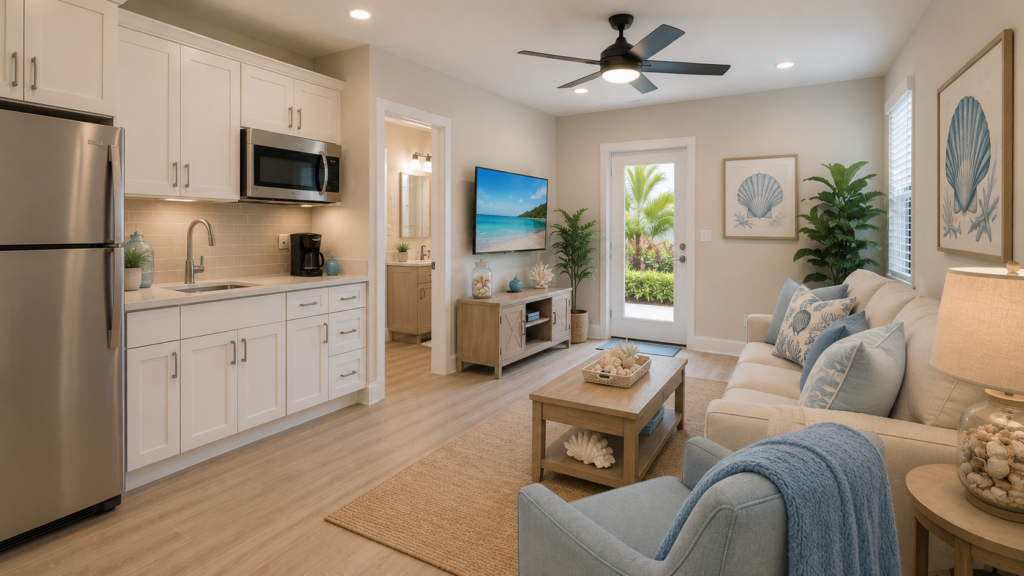
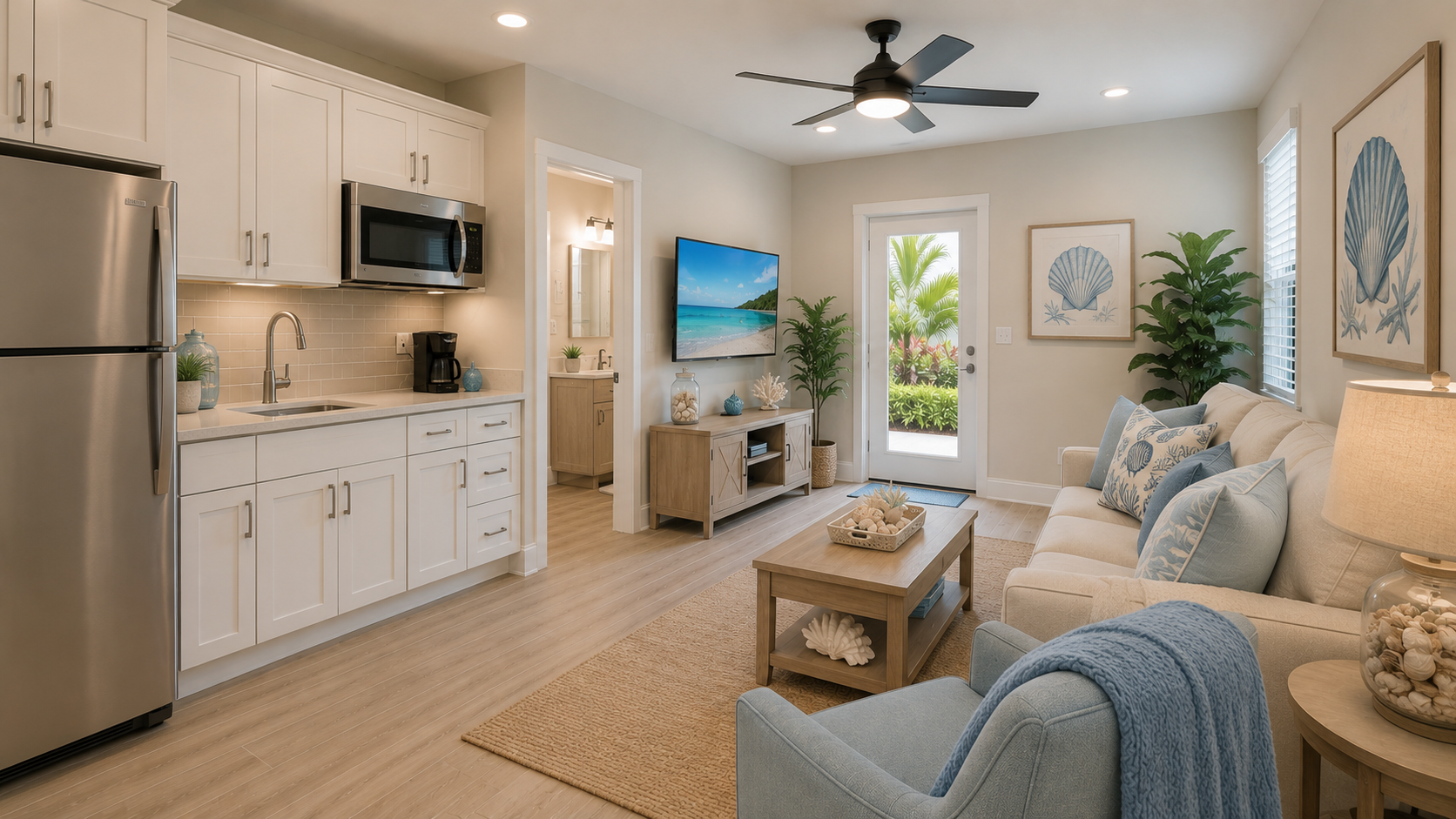
In most new-construction in-law suites, builders deliberately include everything a family needs to live comfortably — a private entrance, living room, bedroom, full bath, cabinets, a sink, a dishwasher, and a full-size refrigerator — and leave out one thing: a built-in oven and cooktop. That single omission is usually what keeps the suite classified as part of the main home rather than a second, independent residence. Add a permanently installed oven and cooktop and you’ve often created what the building code can treat as a separate living unit.
Sink
Standard in a kitchenette — keeps the suite self-sufficient.
Full-size fridge
A full refrigerator, not a mini — part of what makes a suite livable.
Dishwasher
Often included, and it doesn’t affect how the suite is classified.
No built-in range
The line. Leaving out the built-in oven and cooktop keeps it a kitchenette.
The portable-appliance solution for everyday cooking
So how do families get real, everyday cooking ability without a built-in range? The simplest, most common solution is portable appliances: a countertop convection oven and a plug-in induction burner or two-burner hot plate. For most families this covers nearly everything they’d actually cook day to day — and because these appliances simply plug in, the suite keeps the comfort of a full kitchen while staying a kitchenette on paper. Nothing about this is unusual; the same appliances are used in apartments, guest spaces, and offices everywhere.
Resale homes: full kitchens are common (and usually fine)
If you tour existing Florida homes, you’ll find plenty of mother-in-law suites that already have full kitchens — that’s normal, not a red flag. These were typically built with special permitting, approved as an accessory dwelling unit, or grandfathered in under older rules. The one thing worth confirming is whether that kitchen was permitted, because proper permitting is what protects you at resale and appraisal.
Why it’s usually fine
A full-kitchen suite on the resale market typically means someone already did the work to make it legitimate — special permitting, approval as a secondary unit, or older grandfathered rules.
The one thing to confirm
Ask whether the kitchen was permitted. A permitted kitchen protects you down the road; an unpermitted one can surface at resale, appraisal, or insurance.
Why the rules vary across Florida
The exact line between an in-law suite and a separate dwelling isn’t the same everywhere. Counties like Orange, Duval, and Hillsborough each define kitchens, permitting, and secondary units a little differently, and the rules change over time. A clear “yes” in one city can be a “not without a variance” in the next — so always confirm with the local building department before you buy or plan to add a kitchen.
Thinking about a suite with a kitchen? Start here.
Before you fall in love with a layout — or assume you can add a full kitchen later — check the local zoning, or just ask us. Knowing what’s permitted, and what isn’t, is exactly how you avoid an expensive surprise in a competitive market. That’s what we’re here for.
Want to know whether a suite’s kitchen is permitted — or where to find homes with the right setup for your family? We help Florida families navigate exactly what’s allowed, county by county. Let’s find the right fit.
Common questions