



The Florida Multigenerational Home Glossary: Suite, Casita, Guest House & More
Builders and agents use these words loosely on purpose. Here’s what each one actually means — and the single feature that tells you whether you’re looking at a real suite or a dressed-up guest room.
When families start searching, they hit a vocabulary problem before anything else. The same space gets half a dozen names depending on who’s selling it, and the names don’t line up with what the space can actually do. We help families buy and sell these homes across Florida every day, and the most common thing we untangle is this exact one: assuming that because a listing says “casita,” the home is set up for a second household. Often it isn’t. Let’s sort the words out, because the difference decides whether your parents can actually live there.
Suite vs. en suite: don’t mix them up
One quick word to clear up first, because it trips almost everyone: an “in-law suite” is not the same as an “en suite.” An en suite is simply a bedroom with a private bathroom attached — one you can only reach from inside the bedroom, never from the hallway. The term is French and essentially means “in sequence,” or attached. So an en suite describes a bathroom layout; an in-law suite is an entire living space. Don’t let the similar-sounding labels fool you.
Mother-in-law suite (also called an in-law suite)
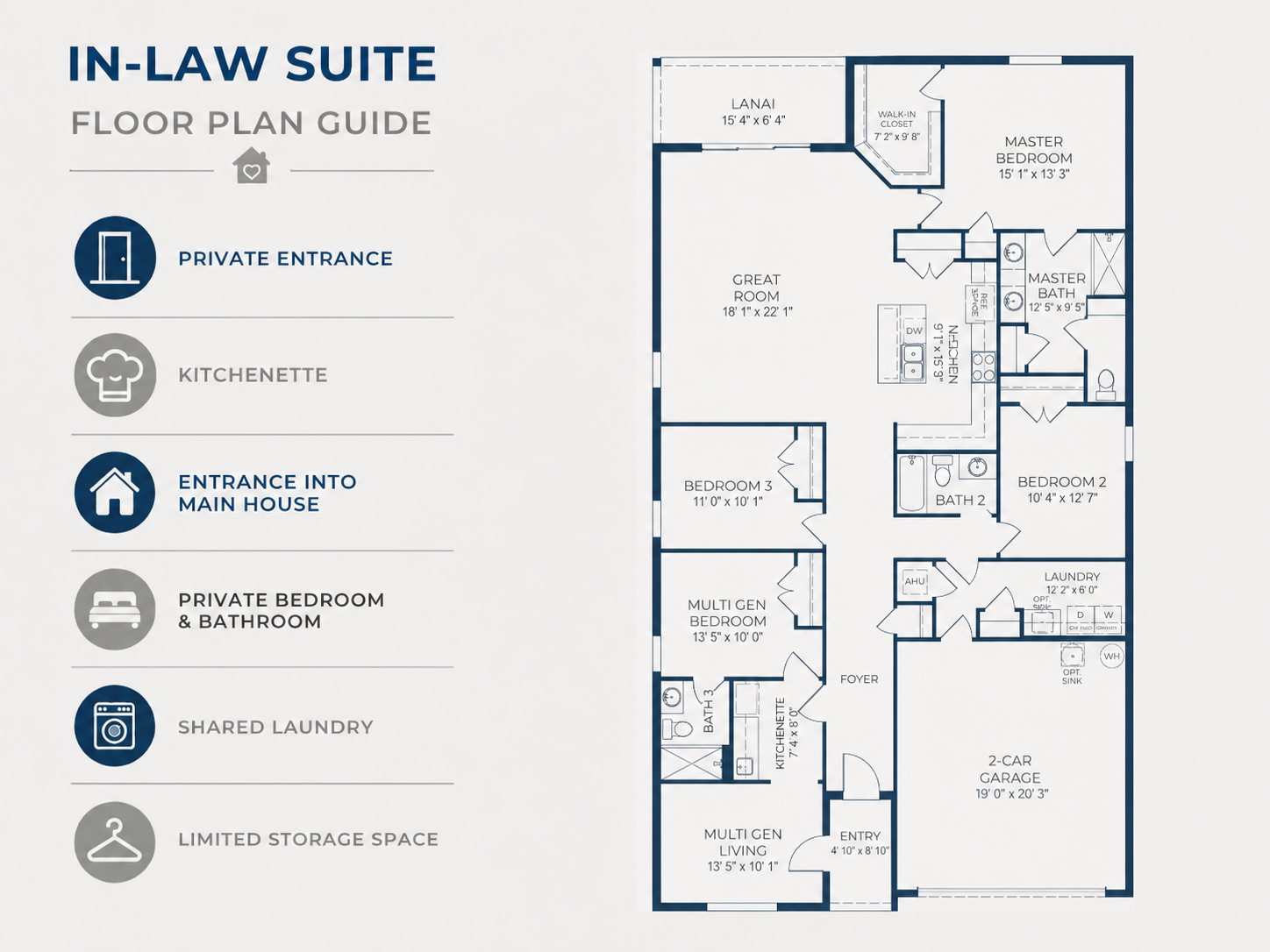
A mother-in-law suite — or in-law suite — is a self-contained living space built into the main home: its own private entry, a living area, a kitchenette with a sink, a private full bath, and ideally its own laundry. It’s designed so a relative can run their own household without folding into the main one. This is the only configuration inside the main house that reliably delivers true independence rather than just an extra bedroom.
The builder-branded suites
The clearest examples come from the national builders that sell multigen as a named product line. Lennar markets NextGen as “the home within a home” — a private suite with its own entrance, kitchenette, bath, and living area. Pulte’s AllGen floor plans add a secondary living suite with a kitchenette, living area, bedroom, and bath. D.R. Horton’s MultiGen plans include a separate space with a full kitchen, living area, bath, and its own interior and exterior entrances. When a builder brands the concept, they’ve almost always built in a real kitchenette — though they still vary on the finer points like in-suite laundry, a private entrance, or a garage, so you read the spec.
If you’re shopping new construction, you don’t have to decode every brochure yourself. We keep a working database of which Florida communities and floor plans include a true in-law suite — and which just call it one. Knowing where to find the real ones is most of the work, and it’s the part we’ve already done.
Casita and cabana (usually the same thing)
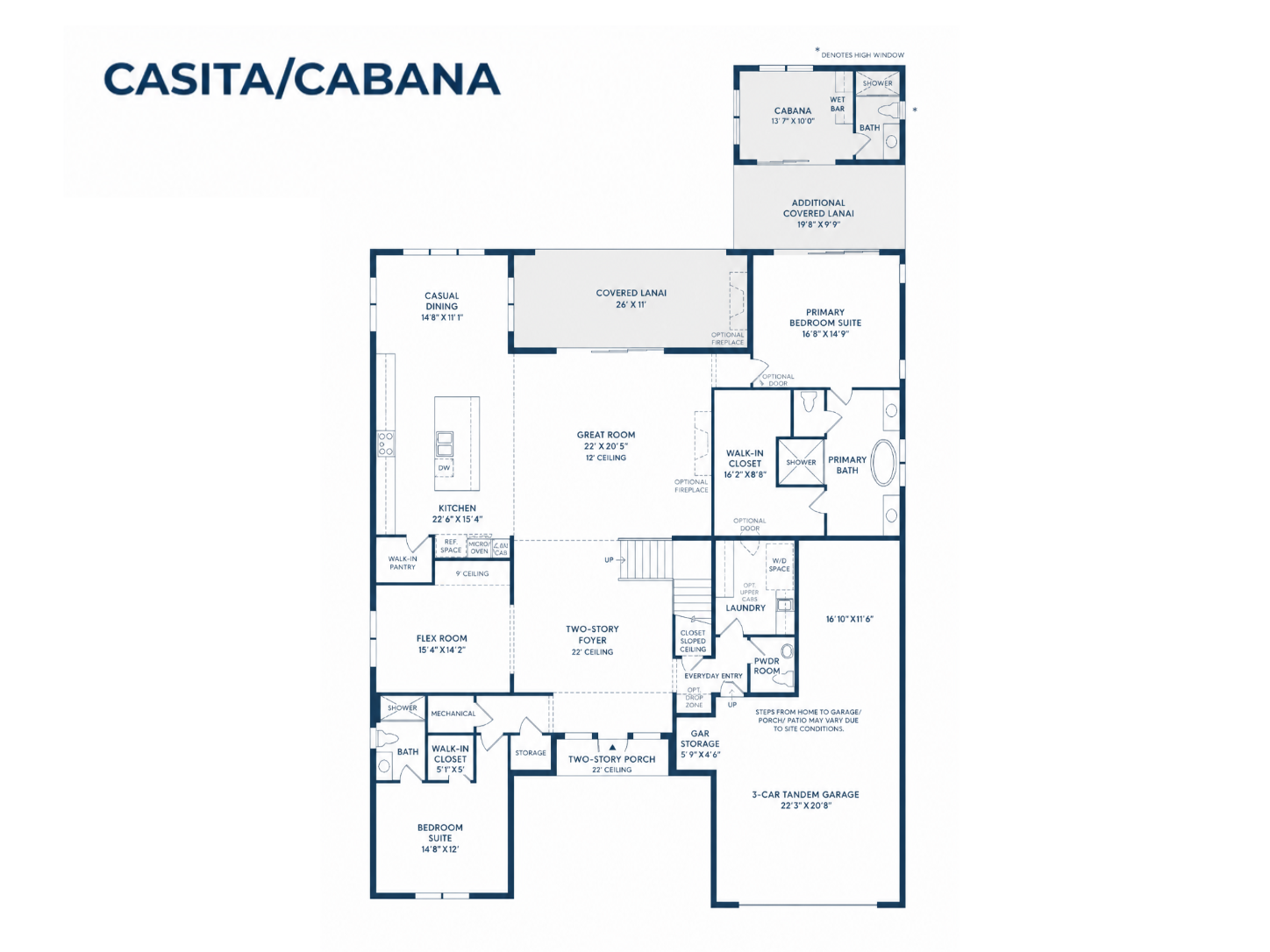
In Florida new construction, builders use “casita” and “cabana” interchangeably — both are marketing words for a detached or semi-detached guest room, typically a bedroom, a private bath, and a walk-in closet, often positioned off a courtyard or pool. Some include a sitting area, so they technically have a “living space.” What they almost never include is a kitchen.
You’ll frequently see a wet bar instead — a sink and a counter, maybe a bar fridge — which photographs like a kitchenette but isn’t one. A space with a bath, a sitting room, and a wet bar but nowhere to cook is a lovely spot for a weekend guest. It is not a setup where a parent can run their own household. The Spanish name on the brochure tells you nothing reliable about whether anyone can actually live there independently.
Detached guest house
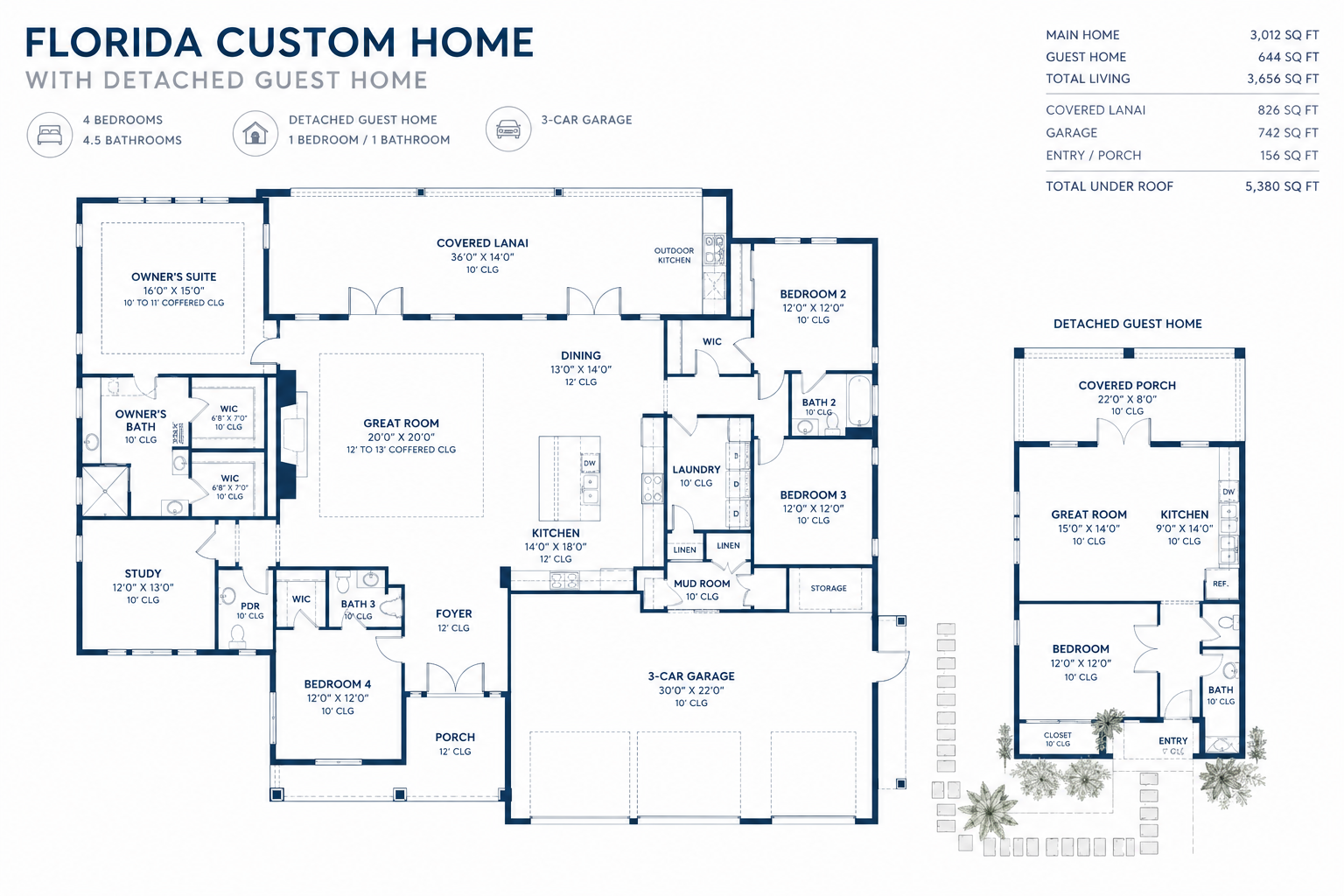
A detached guest house is a fully separate structure on the same parcel — essentially two homes on one lot. Unlike a casita, a true guest house usually has a full kitchen, its own driveway and entrance, and complete independence. It offers the strongest separation of any option short of buying two properties, which is why families ask for it constantly.
When the county permits a detached unit as its own legal dwelling, you’ll often hear it called an ADU (accessory dwelling unit). The catch is supply and price: genuine detached guest houses are far less common in Florida new construction and typically command a premium when you do find them.
In-law quarters (a private zone, no kitchen)
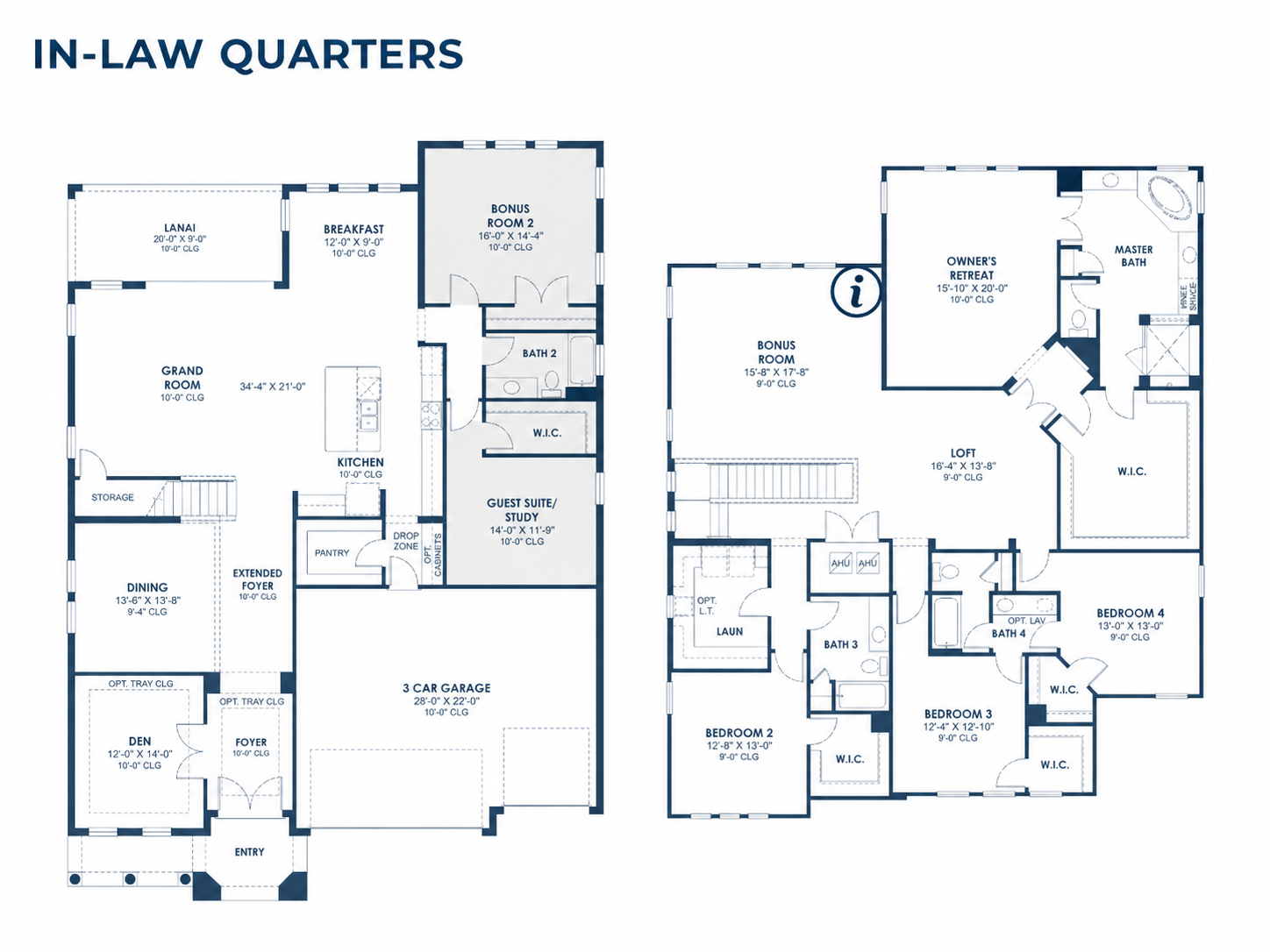
There’s no official industry name for this one, so we call it in-law quarters. It’s a section of the main house that lives like a private zone — a bedroom, a private bath, a walk-in closet, and often a bonus or sitting room — with one contained way in and out, so a relative doesn’t have to walk through the family’s living room to get a glass of water. The kitchen is usually close by, but it’s the household’s shared kitchen, not a private one.
In-law quarters give real day-to-day privacy, and for a parent happy to share a kitchen they work beautifully. What they aren’t is a self-contained dwelling. The thing they’re missing, compared with a true suite, is the kitchenette — which is exactly the line that separates a real suite from everything below it.
Garage apartment (second-floor suite)
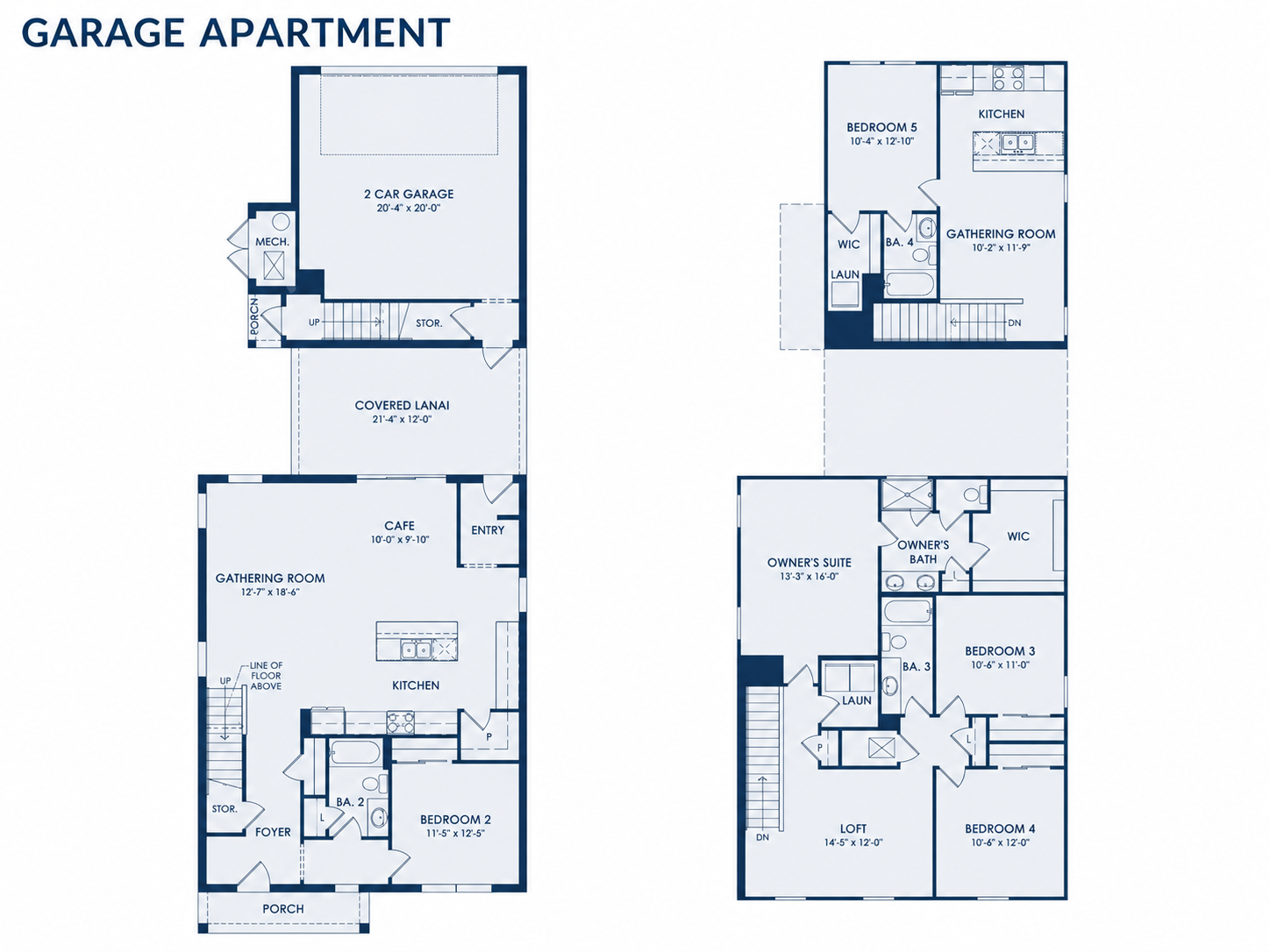
A garage apartment — sometimes called a carriage house — is a living space above or beside a detached garage, with its own stairway entrance and often a full or near-full kitchen. It delivers strong separation and a private entry while keeping everything on one parcel. A handful of Florida builders offer a second-floor garage-apartment layout as a multigen option.
The trade-off is the stairs. For a family member whose mobility may change over time, a second-floor suite can become a problem down the road, so it tends to suit younger relatives — adult children, a returning graduate — more than aging parents.
Duplex
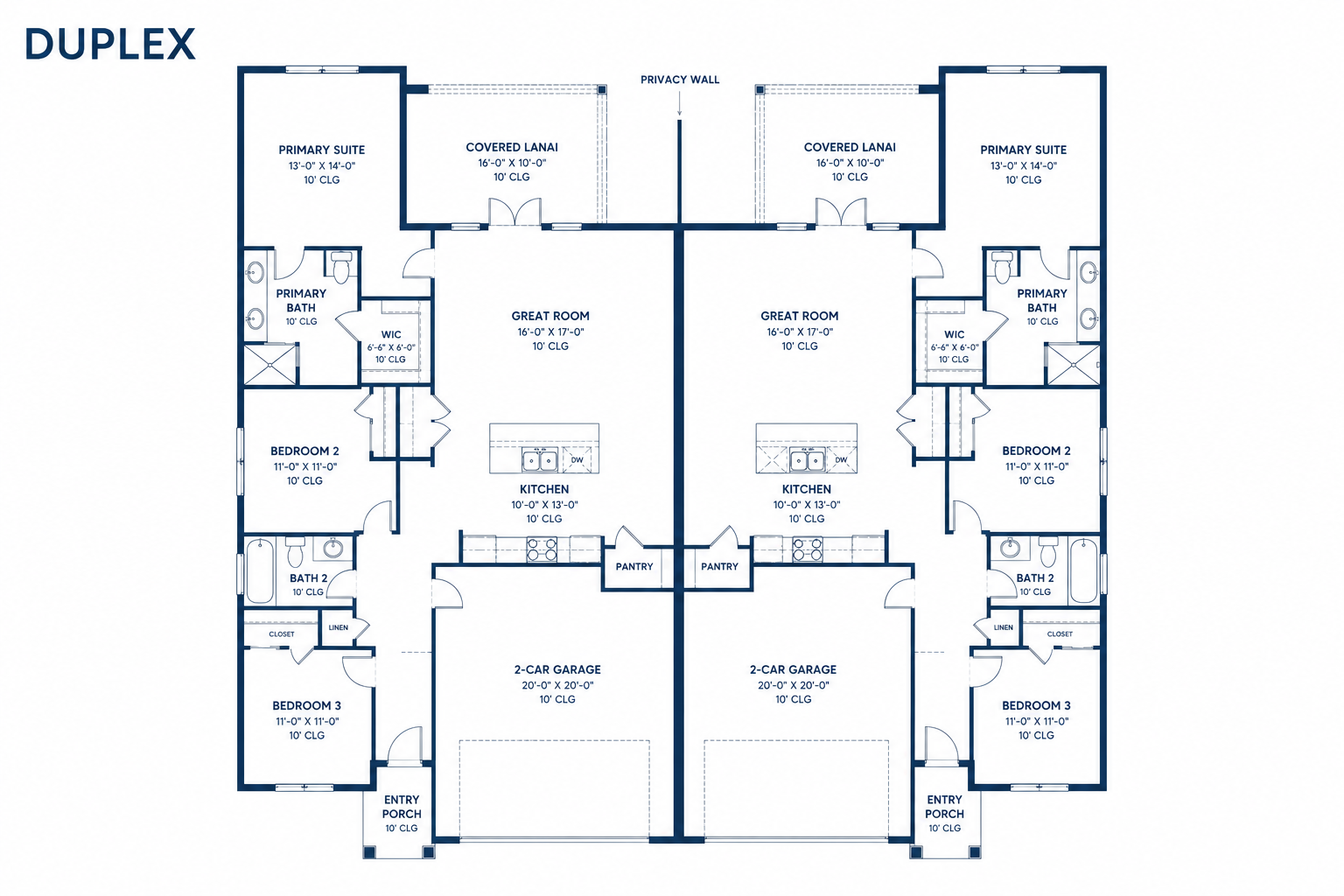
A duplex takes separation all the way: two complete, independent homes sharing one building, each with its own entrance, full kitchen, and utility meters. It’s the best fit when both households want full independence rather than just privacy — a clean financial split, separate routines, even separate pets — while still sharing one property and one purchase.
It’s the most separate option on this list, and not right for every family. We break down exactly when it beats a suite in our guide to when a duplex is the best multigen setup.
Forget the name. Count the five must-haves.
Whatever a space is called, it’s only a true multigenerational suite if it has five things: a private entry, a private living space, a kitchenette with a sink, a private full bath, and private laundry. In short, strip out the kitchenette and you don’t have a suite — you have a guest room with extra steps. When you tour a property, ignore the label and walk the floor plan against those five.
The name is marketing. The features are the truth.
Every option, side by side
| Configuration | Where it is | Kitchen | A true suite? |
|---|---|---|---|
| Mother-in-law / in-law suite | Inside the main home | Kitchenette | Yes |
| Casita / cabana | Detached or off a courtyard | Wet bar at most | Frequently not |
| Detached guest house | Separate structure on the lot | Full kitchen | Yes |
| In-law quarters | A private zone in the main home | No kitchen | No — private zone only |
| Garage apartment | Above a detached garage | Often full / near-full | Usually, mind the stairs |
| Duplex | Two homes sharing one building | Full kitchen each | Yes — fully independent |
Builder-branded lines — Lennar NextGen, Pulte AllGen, D.R. Horton MultiGen — are mother-in-law suites built to this standard.
Why the wrong word costs families money
Families fall in love with a “casita” listing, move a parent in, and only then realize there’s nowhere to cook a meal outside the main kitchen — which quietly erases the independence that was the whole point. The label promised a suite; the floor plan delivered a guest room.
It cuts the other way when you sell, too. Calling a guest room a “suite” in your listing sets up buyer disappointment and slows the sale. Getting the words right protects the people moving in — and the value when it’s time to sell.
Frequently asked questions
What is a mother-in-law suite called?
Is a mother-in-law suite the same as an ADU?
What is a casita, and does it have a kitchen?
Is a cabana the same as a casita?
What is a NextGen home?
Not sure whether the “casita” you’re looking at is actually a suite? Send us the floor plan — we’ll tell you honestly. And if you want the real ones, we already know where they are.