

What Is a Casita?
Quick answer: A casita is a detached or semi-detached guest room — usually a bedroom, a private bath, and a walk-in closet, often opening onto a courtyard or pool. In Florida new construction, “casita” and “cabana” are used interchangeably. What a casita almost never includes is a kitchen — and that single detail is the difference between a guest room and a space where a parent can actually run their own household.
The Spanish word on the brochure tells you nothing reliable about whether anyone can truly live there independently.
If you have toured Florida new construction, you have almost certainly seen the word “casita” on a brochure or a model-home sign. It sounds like a small house — a place where a parent or adult child could live with some independence. Sometimes that is true. Often it is not.
The trouble is that “casita” is a marketing word, not a building specification. Two homes can both advertise a casita and offer completely different things. One might be a true guest house; the other, a bedroom with a fancy name. The label tells you almost nothing about whether someone can actually live there.
This post explains what a casita usually is, why the wet bar that often comes with it is not a kitchen, and what three real Florida floor plans reveal — including one exception that genuinely could work for a multigenerational family.
Read the floor plan, not the label. The deciding detail is whether there is a place to cook — not what the brochure calls the room.
“Casita” and “cabana” usually mean the same thing
Both are marketing words for a detached or semi-detached guest room — typically a bedroom, a private bath, and a walk-in closet, often positioned off a courtyard or pool. Some include a sitting area, so they technically have a “living space.”
On most Florida new-construction floor plans, the casita is an option you select inside the interactive floor-plan tool, which is why you won’t always spot it on the printed brochure. That also means two buyers of the “same” model can end up with very different homes depending on which options they chose.
Why luxury builders put the casita by the pool
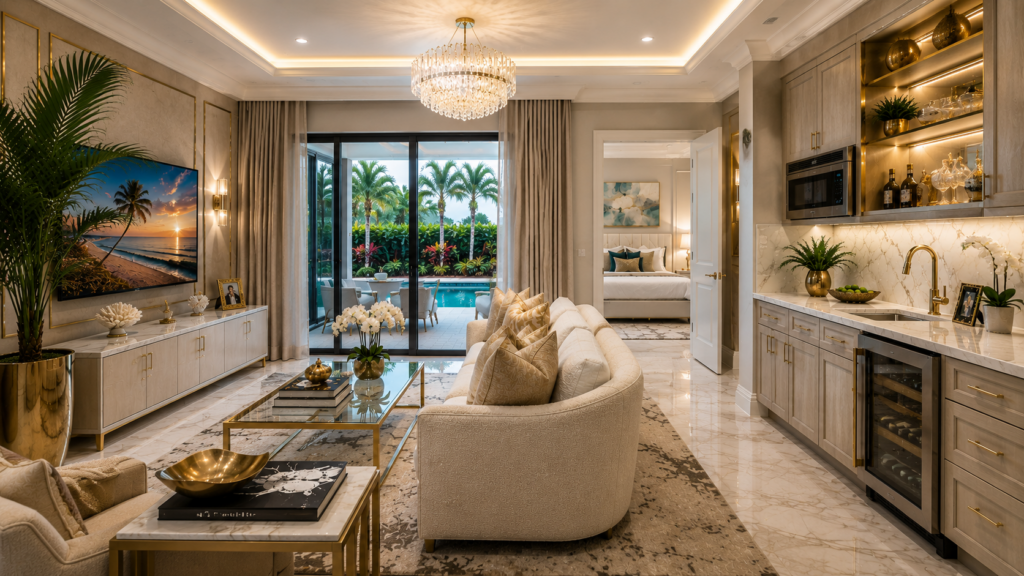
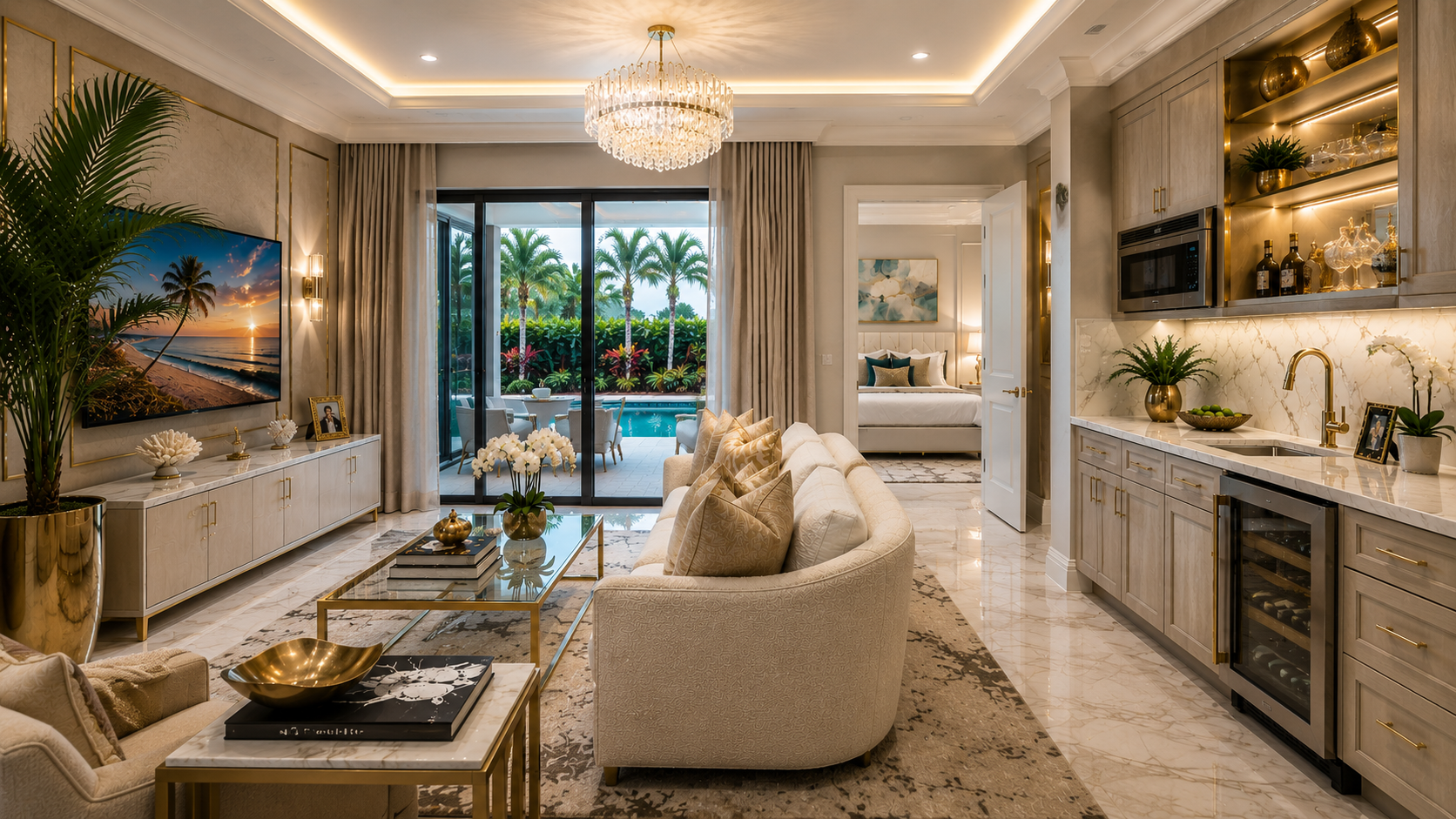
On most luxury Florida new-construction plans, the casita isn’t tucked away as a private apartment — it’s positioned off the courtyard or pool as a polished guest retreat. That placement tells you who it’s really designed for: visitors who stay a weekend, not a parent settling in for good. It’s a beautiful spot to put up out-of-town family or friends for a few nights, with its own bath and a private entrance that lets everyone keep their own schedule.
Where it falls short is year-round, independent living. A poolside cabana-casita is built around comfort and privacy for a short stay, not the kitchen, storage, and laundry someone needs to actually run their own household over the long term. For many multigenerational families touring these homes, that’s the gap worth catching early — the casita they fell for at the model is a wonderful guest space, just not the self-contained suite a live-in parent will need.
The wet bar is not a kitchen
You’ll frequently see a wet bar instead of a kitchen — a sink and a counter, maybe a bar fridge — which photographs like a kitchenette but isn’t one.
A space with a bath, a sitting room, and a wet bar but nowhere to cook is a lovely spot for a weekend guest. It is not a setup where a parent can run their own household. If independent living matters to your family, look for the oven and cooktop, not the label.
What a casita actually looks like
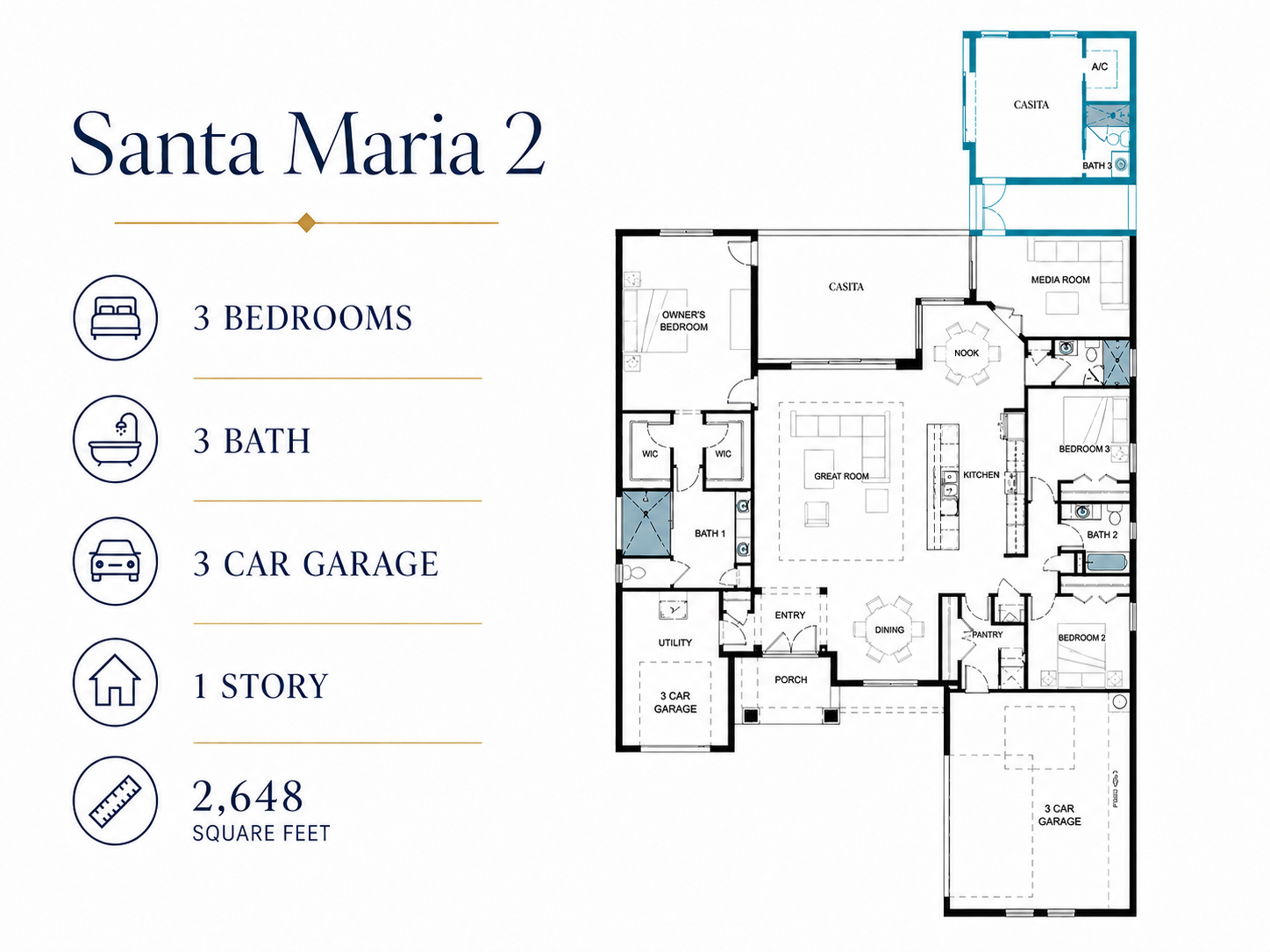
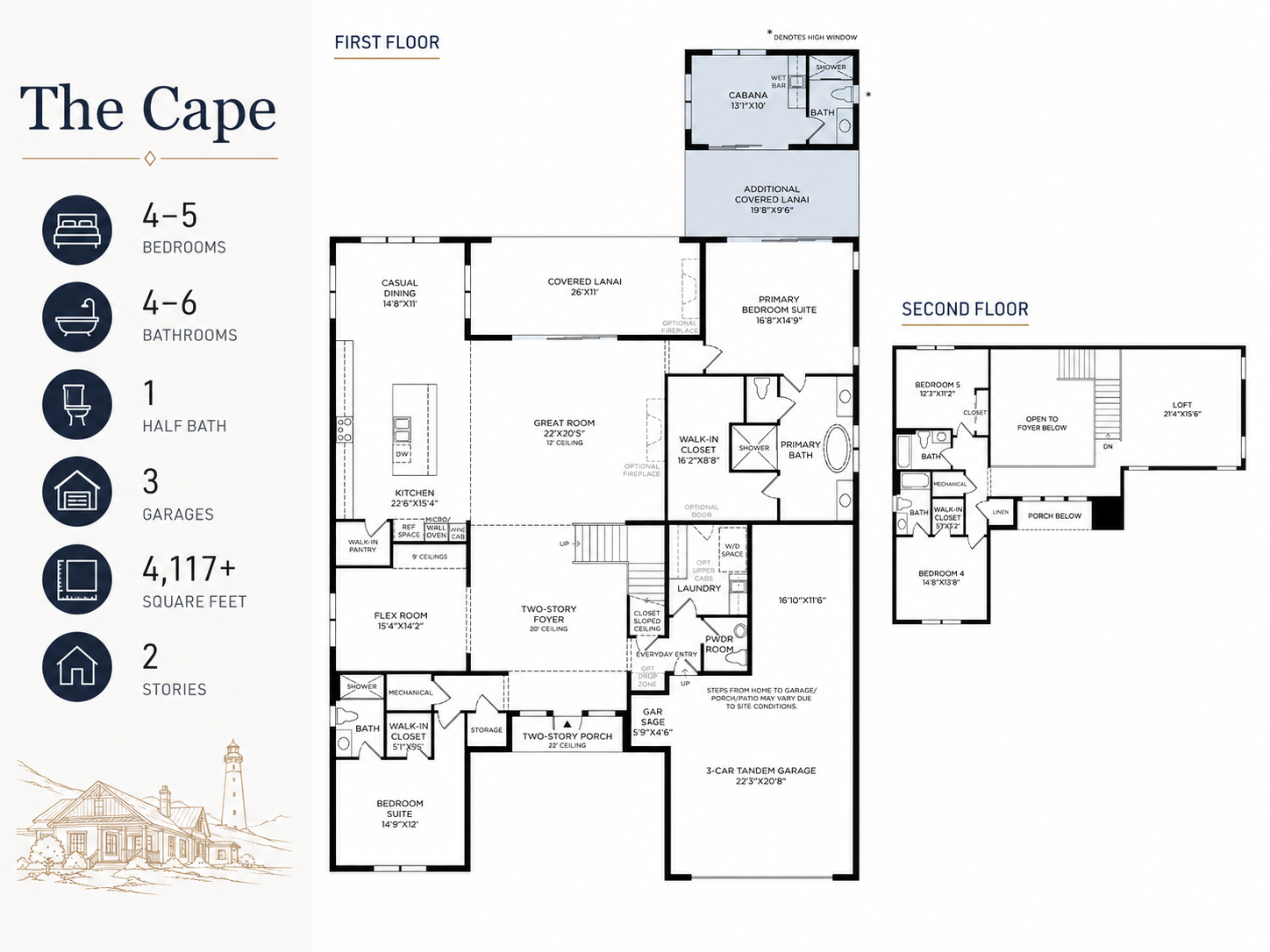
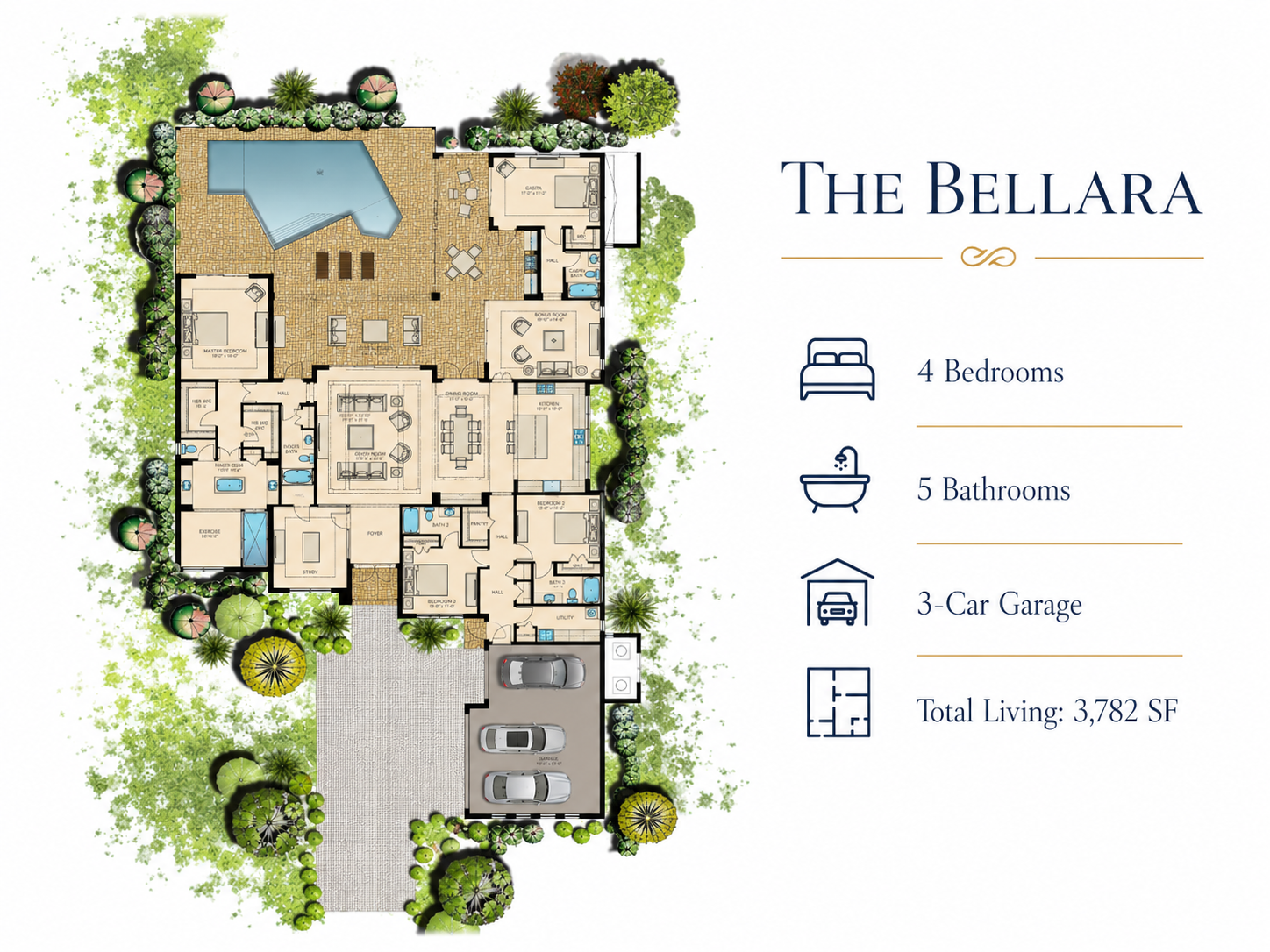
How to read a casita on a floor plan
Ignore the Spanish name and look at the appliances. A wet bar is not a kitchen. A true independent suite — the kind where a parent can run their own household — needs a place to cook. Finding the homes where the casita actually works that way is exactly what we do.
Why the label trips families up
We specialize in multigenerational homes, which means we tour these floor plans constantly. The most common disappointment we see is a family who fell in love with a “casita” online, only to discover on the walkthrough that there is nowhere for their parent to cook.
When we help a family search, we read the floor plan for what it actually offers — not what the brochure calls it — so the home matches how everyone will really live.
Common questions
Frequently asked questions
What is a casita?
Is a casita the same as a cabana?
Does a casita have a kitchen?
Can someone live independently in a casita?
Is a casita good for year-round multigenerational living?
What is the difference between a casa and a casita?
Can I build a casita on my property?
Want help finding a Florida home with a true independent suite? We read the floor plan, not the label.